
Wat Sri Suphan, the Silver Temple in Chiang Mai’s Wua Lai district, is worth visiting for one reason: a craft tradition kept alive by a single community for over two centuries. It is not worth visiting for actual silver. The ordination hall’s outer panels are aluminum, the grounds are free, the hall itself charges 50 baht and closes at 5 PM, and women are not allowed inside the hall for reasons that have nothing to do with Buddhist canon.
The reason most visitors leave disappointed is that they walk in expecting a building covered in real silver and walk out fifteen minutes later, having missed the older red-and-gold viharn standing to their left and the workshop where craftsmen are doing the same repoussé work the temple was built to preserve. The point of the place is the work, not the metal.
If you arrive on a weekday between 8 and 10 in the morning, the hall is open, the grounds are nearly empty, and you can hear the steady tapping from the open-sided workshop along the eastern wall before you see anyone. Two or three men sit on low stools with sheets of aluminum across their knees, hammering patterns from the back of the metal with small steel punches. They do not look up. They have been doing this since the gates opened at six.
Contents
show
Is Wat Sri Suphan worth visiting?
Wat Sri Suphan is worth visiting if you come for craft tradition and Lanna history, and not for silver. It is small, it takes about an hour to see properly, and the single most interesting thing on the grounds is not the silver ordination hall everyone photographs but the older viharn next to it and the workshop where the panels are still being made by hand.
Who should visit Wat Sri Suphan
Three kinds of visitors get value out of the place. People interested in metalwork, in repoussé and chasing and the way a flat sheet of aluminum becomes a panel of Jataka scenes under a hammer, can watch this happening live, which is something you cannot do at any other temple in Chiang Mai. People who want to see a working neighborhood outside the Old City walls will find Wua Lai Road delivers exactly that, especially on Saturday evenings when the Walking Street market runs along the same road. And photographers who prefer empty frames and morning light will get both, because tour buses do not come here.
Who should skip it
Skip it if you are temple-collecting on a tight schedule and want grandeur on the scale of Wat Phra That Doi Suthep or Wat Chedi Luang. Wat Sri Suphan is one ordination hall, one viharn, one chedi, a learning center, and a workshop, all on a plot you can walk across in two minutes. Skip it if you came expecting the entire structure to be solid silver and are not interested in why it is not. And skip it if it is already late afternoon and you have not eaten: the ordination hall closes at 5 PM, and missing the inside means missing about half of what you came for, unless you are a woman, in which case the inside was never on the table to begin with.
What you actually get for the visit
For 50 baht and an hour of your morning, the visit gives you access to the inside of Thailand’s only silver temple, even if the silver is mostly aluminum, a clear view of the 1860s viharn most visitors walk past without noticing, and a workshop where you can stand a meter from the work and watch repoussé being done by hand. It also gives you an optional ten-minute walk to a second silver temple, Wat Muen San, which has none of the restrictions; and on a Saturday it gives you a logical anchor for an afternoon and evening on Wualai Walking Street. That is a reasonable return for the money and the time. The visitors who feel cheated almost always feel cheated because they did not know any of this before they paid the entrance fee.
What is Wat Sri Suphan actually made of?
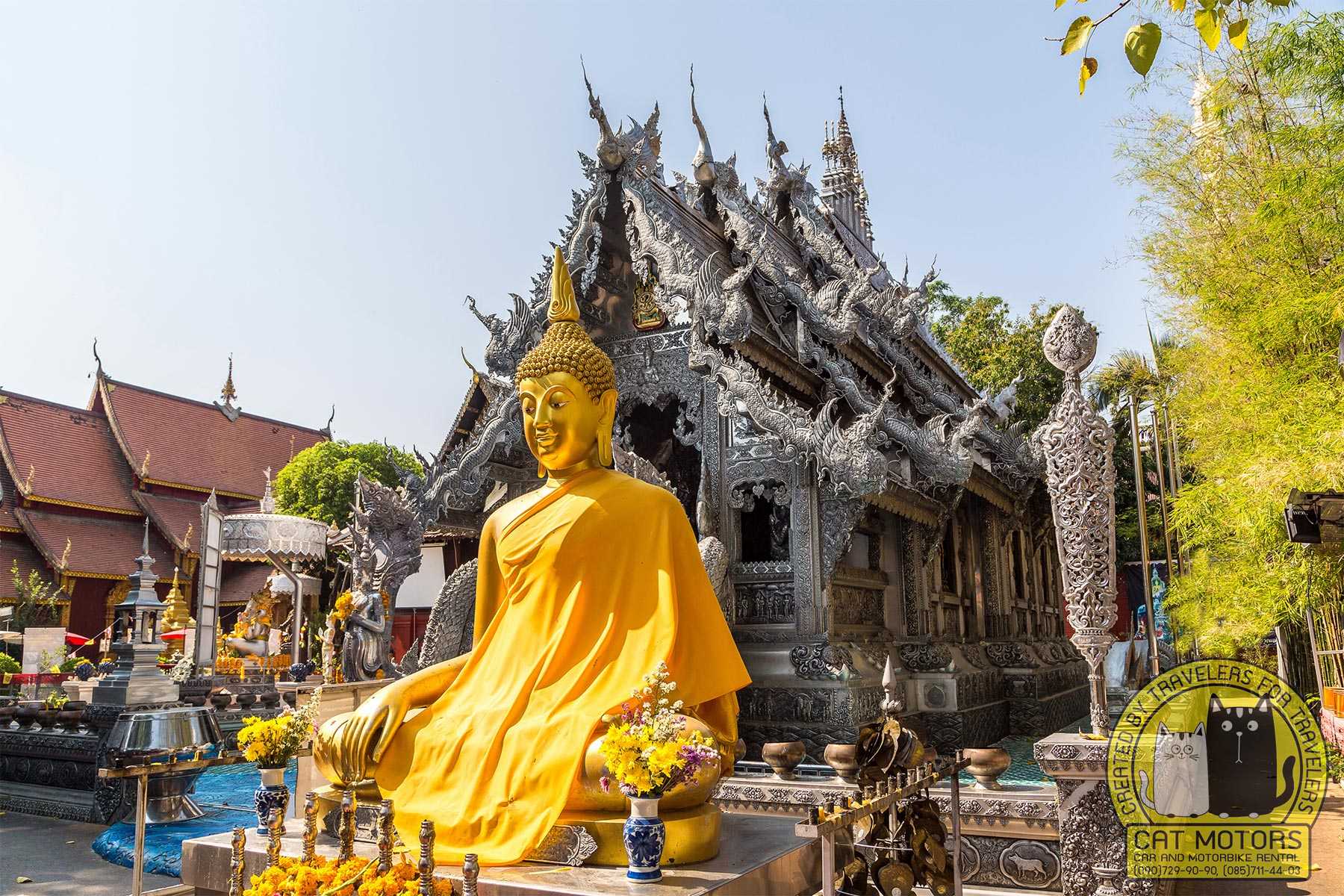
The panels covering the outside of Wat Sri Suphan’s ordination hall are aluminum, not silver. This was a deliberate choice made by the silversmiths themselves, for reasons of durability rather than cost. Pure silver, exposed to the open air of northern Thailand for years at a time, dents under its own weight, scratches, tarnishes, and warps in the wet season. The community that built the hall spent twelve years on it. They were not going to wrap it in a metal that would not survive the first decade.
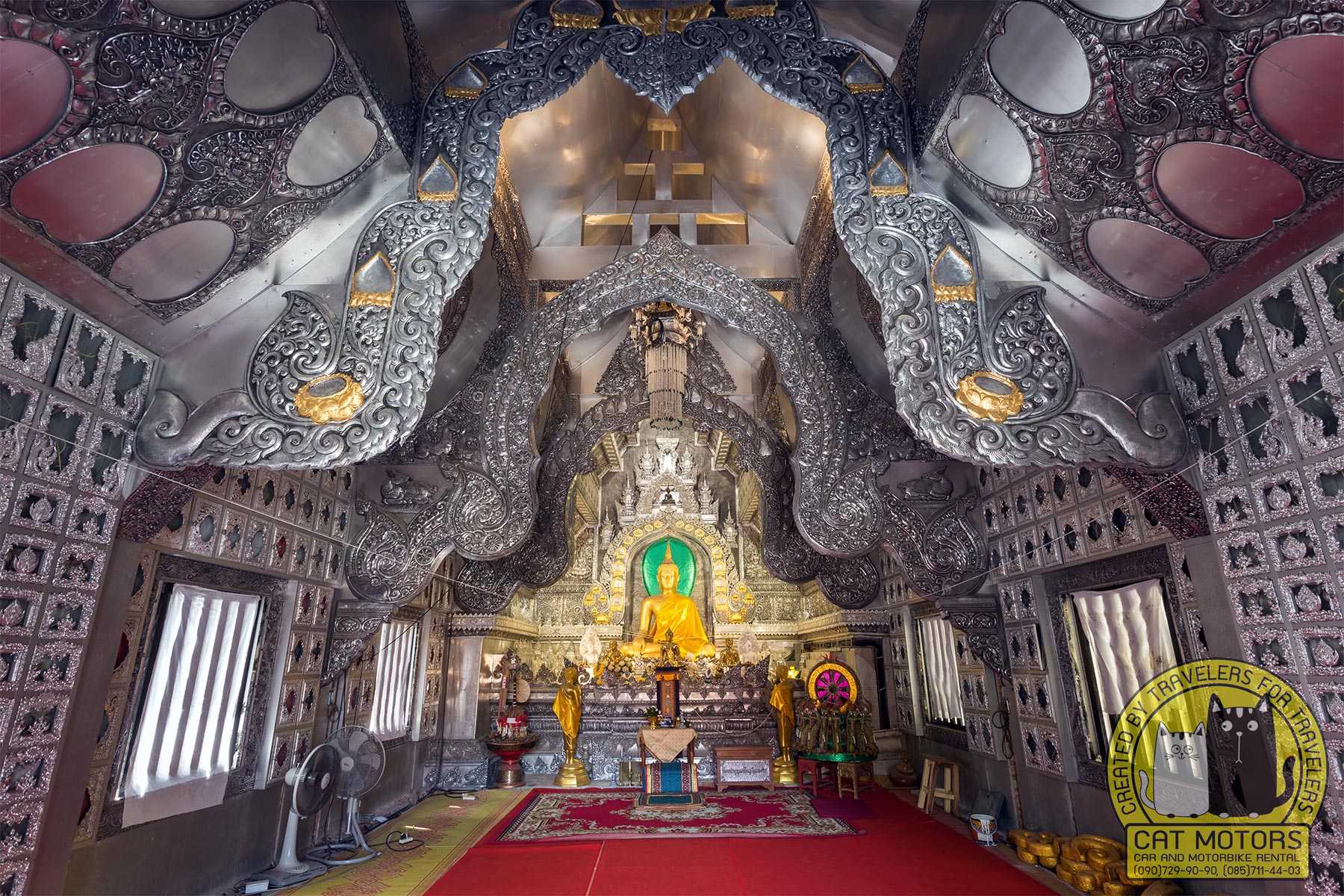
The choice is harder for visitors to accept than it sounds, because the temple still calls itself the Silver Temple and the panels look, in the right light, exactly like silver. They have the same cold grey finish, the same mirrored shine across the relief work, the same hammered texture. In the workshop along the eastern wall, the craftsmen will tell you, if you ask, that they call the material khua niam, which is aluminum. They sometimes mix in nickel and zinc for hardness. They say this without any embarrassment. From their point of view it is not a substitution; it is the correct material for the job.
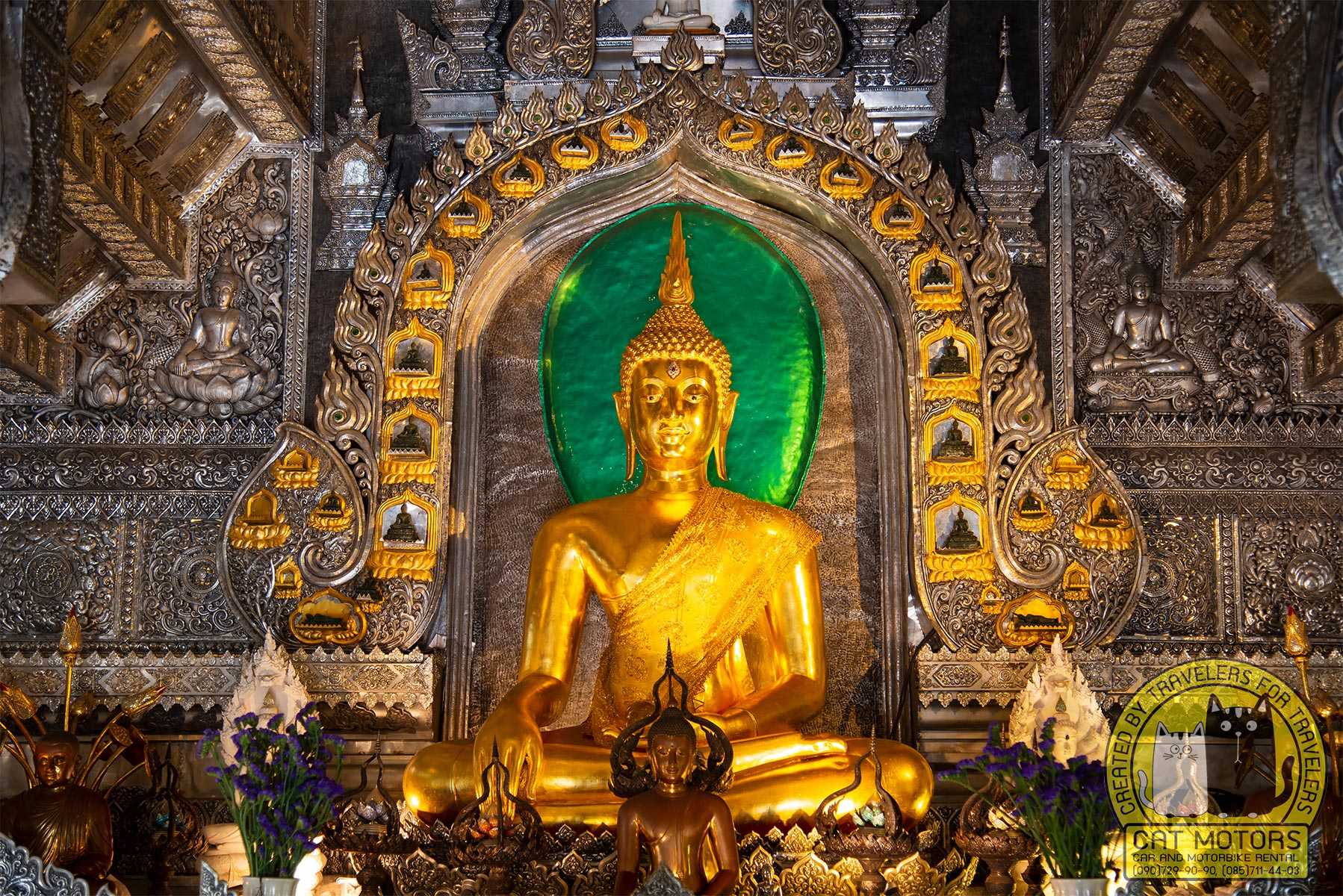
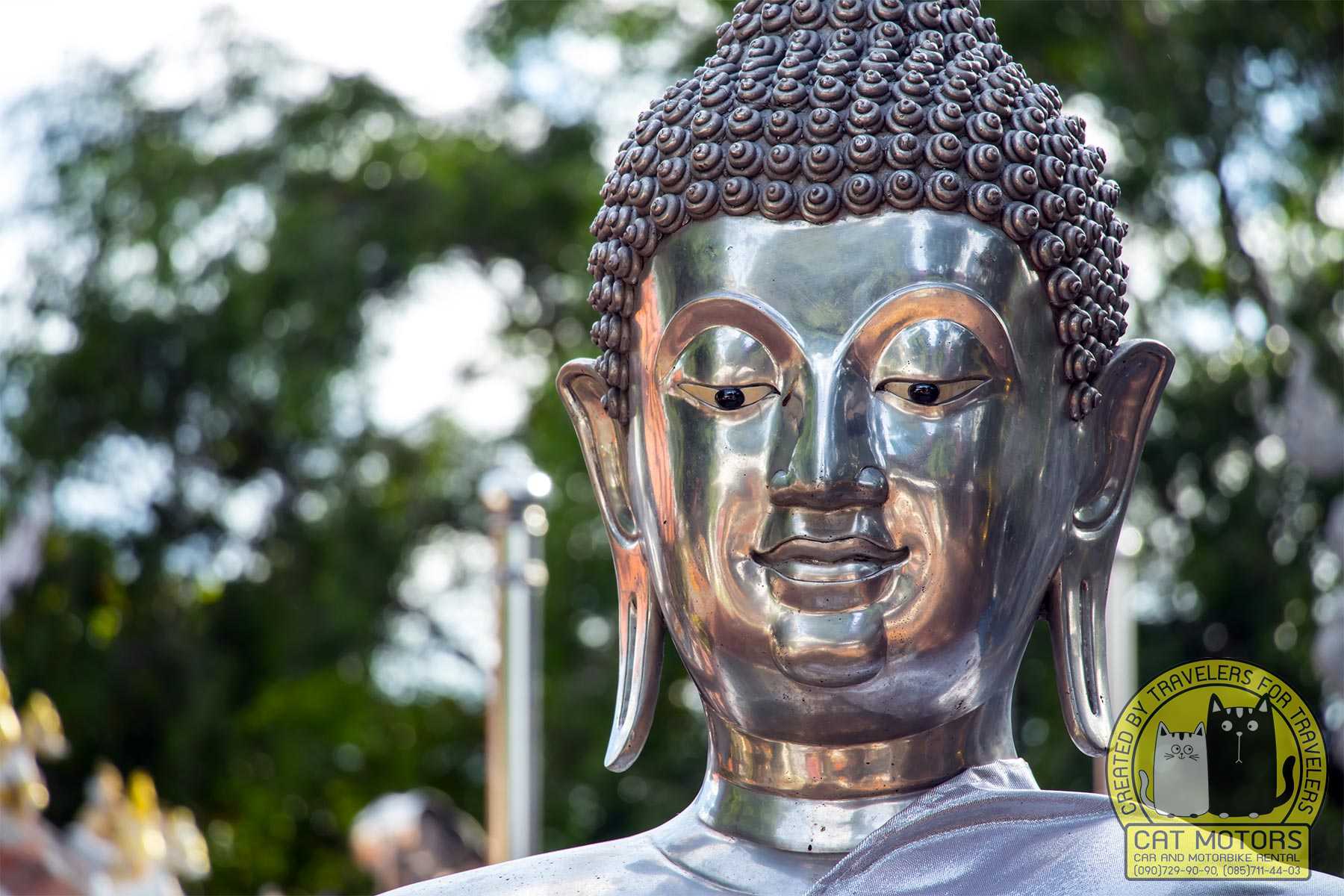
Real silver is still on the building, but only where it has ritual weight. The Buddha images inside the hall are silver. The interior sanctuary uses silver leaf on certain panels and ornaments. The principal image, Phra Jao Jed Tue, is gilt over a much older Chiang Saen-style core dating to around 1500, the year the temple was founded. None of these is exposed to weather. The reasoning is consistent throughout: silver where it matters in the religious sense, aluminum where it has to last.
The panels themselves are worth looking at slowly. Most visitors register the silvery wall, take a photo, and move on, without noticing that the relief work tells stories: Jataka tales from the Buddha’s previous lives, the twelve animals of the Thai zodiac, a map of the world with countries labeled in Thai script, and, in places, modern intrusions like passenger jets, Chiang Mai landmarks, and (on one panel near the back) a small group of comic-book superheroes. The mix is not a mistake. The Wua Lai craftsmen who do the work see no reason to keep tradition and the present day in separate rooms.
The ordination hall: 12 years, one community, 35 million baht
The ordination hall at Wat Sri Suphan took twelve years and 35,152,314 baht to complete, paid for entirely by donations from worshippers and built only by craftsmen from the surrounding Wua Lai community. No outside contractors were brought in. The decision was the abbot’s, and he made it on principle: if the building was meant to prove that the local craft tradition was still alive, then nothing about its construction could be outsourced.
The temple itself is much older than the silver hall. It was founded around 1500 under King Mueang Kaeo, the eleventh ruler of the Mangrai Dynasty: the line of kings descending from King Mengrai, the founder of Chiang Mai himself, who is commemorated together with two allied kings at the Three Kings Monument in the Old City. The temple sits on a plot south of the city walls in what was then the edge of Chiang Mai. The original ordination hall stood on the same foundation that supports the silver one today, and the eight bai sema, the boundary stones that mark the consecrated area around any ubosot, are the originals from the 1500s, kept in place during the rebuild.
The reason the silver craft is in this neighborhood at all is older than the temple’s reconstruction and deserves a sentence. The Wua Lai community is not native to Chiang Mai. Their ancestors were silversmiths from a village called Ban Nguai Lai in the upper Salween River basin, in what is now Shan State in Burma. The same river, much further south, today forms part of the Thai-Myanmar border in Mae Hong Son province, where it can still be reached by long-tail boat from Mae Sam Laep. The Wua Lai community itself was brought to Chiang Mai as captives in 1799 by King Kawila during his campaigns to repopulate the city after a long period of abandonment. Nguai Lai became Wua Lai in central Thai over the generations (wua means ox), and the neighborhood now carries the name of a village that no longer exists. Two hundred and twenty-five years later, their descendants are still hammering metal a few hundred meters from where their ancestors were settled.
The abbot is Phra Kru Phithatsuthikhun, born Suphon Suthasilo, and he had been thinking about the silver ordination hall project for at least four years before construction started. In 2000, the year of the temple’s 500th anniversary, he founded what the temple’s records call the Lanna Handicraft Group: a small workshop attached to the temple, set up to teach the techniques of repoussé and chasing to younger craftsmen and to give the older ones a place to keep working at a time when the Wua Lai silver trade was thinning out. Construction of the silver ordination hall did not begin until 2004. By that point the workshop had been running for four years, and the men who would do the work knew each other and knew the patterns.
Twelve years is a long time to spend on a single building of this size. The hall is not large. The floor plan is a standard Lanna ubosot, perhaps fifteen meters along its longest axis, and a normal construction crew would have finished the structural shell in under a year. The twelve years went into the panels: hand-hammered, one section at a time, in a workshop where four or five men can sit comfortably and the hammering does not stop for most of the day. Thirty-five million baht across twelve years works out to roughly three million a year, split among four or five men working full days on detail panels. That is well below any commercial wage for skilled metalwork at that level. Most of the cost went to materials and to running the workshop. The labor was, in any meaningful sense, donated.
This matters for what comes next, which is the part most visitors find hardest to accept.
Why can’t women enter Wat Sri Suphan?
Women are not allowed inside the ordination hall at Wat Sri Suphan because of a Lanna folk belief, not a Buddhist rule. Sacred amulets and protective inscriptions buried under the original foundation are believed to lose their power in the presence of women. Buddhism itself does not bar women from entering ordination halls. In most temples in Thailand, women walk in and out of the ubosot freely, sit on the floor, make offerings, and leave without anyone noticing. Wat Sri Suphan is the exception, and the reason is local and specific.
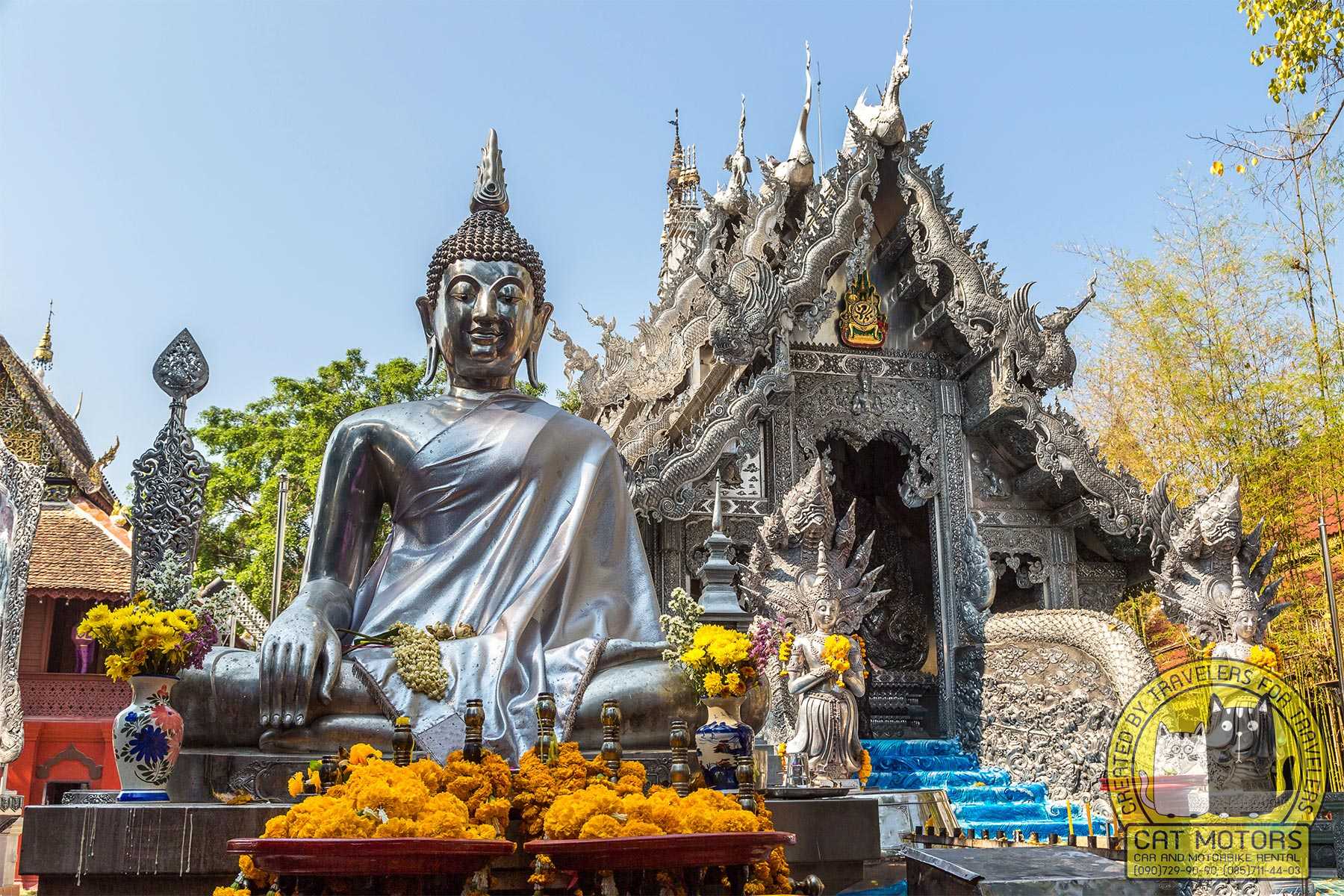
A small painted sign in front of the hall explains it in two languages. The sign says, in the Thai version, that under the foundation are khata, meaning protective spells and consecrated objects, placed there during the original construction in the early 1500s and left undisturbed during the 2004–2016 rebuilding. The sign says that the presence of a woman inside the ordination area is believed to disrupt the protective field these objects generate. It also says that the temple has chosen to honor the belief out of respect for the men who placed the objects there five centuries ago. The English version is shorter and less precise. It tends to leave foreign visitors with the impression that the temple is making a contemporary judgment about women, which it is not.
This distinction matters because the alternative reading is unpleasant and misleading: that women are excluded from a working Buddhist temple in 2026 on the grounds that they are women. That reading is wrong. The exclusion is from one specific room, in one specific temple, on the basis of a belief about objects buried in the soil under that room. Women can enter every other building on the temple grounds without restriction. The viharn next door is open to anyone. The workshop is open to anyone. The chedi is open to anyone. The grounds, the learning center, the souvenir stalls, and the area immediately outside the ordination hall (where the silver panels are perfectly visible from a distance of about three meters) are open to anyone. What is closed to women is the floor of one specific hall.
It is also worth knowing that Wat Muen San, the second silver temple three hundred meters down the road, has no such restriction at all. Women can enter every part of it. If the inside of a silver-clad hall is what you came for, you can walk to one in ten minutes. Directions and what to expect are below, under what else is on the temple grounds.
What else is on the temple grounds: what most visitors miss
Most visitors at Wat Sri Suphan walk straight to the ordination hall, take their photos, and leave, missing the older viharn directly to the left of the entrance, the open-sided silversmithing workshop along the eastern wall, the Lanna Arts Learning Center, and the second silver temple ten minutes away on foot. These are not minor extras: the viharn is older than the silver hall by about a hundred and forty years, and the workshop is the reason the silver hall exists at all.
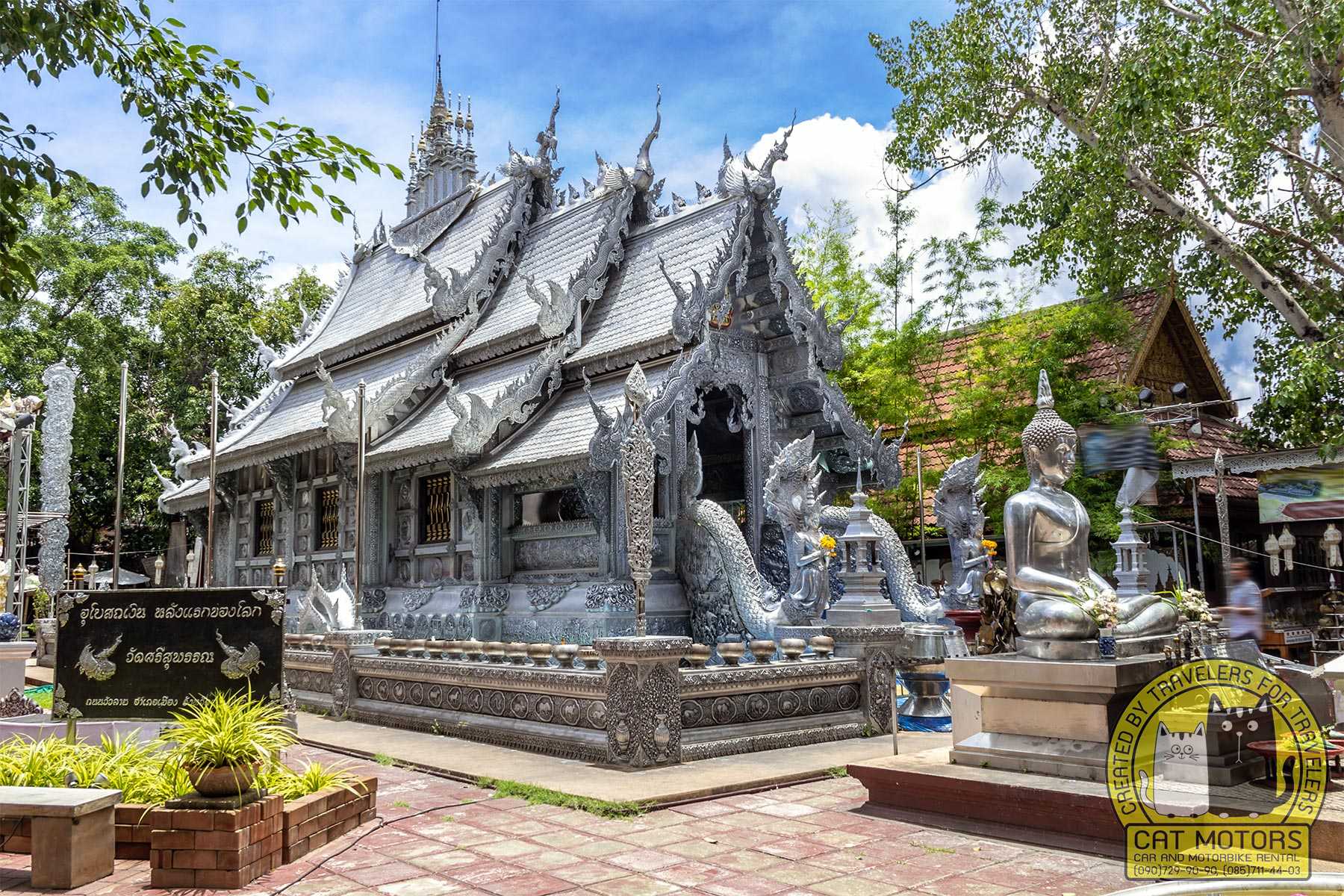
The viharn: what most visitors walk past
The red-and-gold viharn standing to the left of the main entrance is the oldest building on the grounds. It was built in the 1860s during the rule of Kawilorot Suriyawong, the sixth ruler of Chiang Mai under the Chao Chet Ton dynasty, as a replacement for an even earlier hall that had fallen into disrepair. The roof is the giveaway: a four-tiered overlapping Lanna structure with naga bargeboards running along the gables and gilded chofa finials at the apex of each tier. This is the kind of roof that takes a serious crew several months to assemble, and it has been sitting there, more or less unchanged, since long before any living member of the Wua Lai community was born.
What is curious is that almost no visitor goes inside. People file past it on the way to the silver hall, glance at the red lacquer and the gold trim, and keep walking. I have stood in the courtyard at nine in the morning and watched groups of four and five tourists walk within two meters of the viharn’s open door without looking through it. Inside there is a seated principal Buddha, several smaller images, the usual offerings, and the kind of cool wooden silence that older Lanna halls tend to have. It takes about three minutes to step in, look around, and step out. Almost nobody does it.
The workshop and the Learning Center
Along the eastern wall of the grounds, behind the silver hall, there is an open-sided workshop where craftsmen produce the panels that the temple sells and the panels that go onto the building when sections need replacing. The workshop is not behind glass and there is no rope. You can stand a meter away from a man who is hammering a Buddha figure out of an aluminum sheet and watch him do it, and if you stand there long enough he will probably nod at you. The hammering produces a steady high tap that carries across the entire compound. If you arrive in the morning you will hear it before you see the workshop.
Next to the workshop is the Sala Sip Mu Lanna, the Ancient Lanna Arts Study Centre, a small school the temple runs to teach repoussé, chasing, and related techniques to younger craftsmen and, sometimes, to interested visitors. Walk-in workshops are not always available, but the building is open, and looking inside is free. The point of the school, and of the workshop next to it, is the same point as the silver hall itself: a craft tradition that almost died in the late twentieth century is being kept alive by a small number of men who chose to keep doing it.
Wat Muen San: 300 meters away, no restrictions
Wat Muen San is the second silver temple in the Wua Lai neighborhood, three hundred meters south of Wat Sri Suphan along the same road, and it is worth a visit on its own terms, especially for women who cannot enter the ordination hall at Wat Sri Suphan. Wat Muen San’s main hall, the Suttajitto Gallery, was completed in 2010, six years before the more famous one up the road. The repoussé work is comparable. The building is smaller. Entry is free. There is no restriction on women. There are almost never any other visitors. There is also a small museum with material from the Second World War, when the temple grounds were used by Japanese troops. The displays do not entirely explain how, and the temple does not particularly emphasize this part of its history.
The walk from one to the other takes about ten minutes along Wua Lai Road, past silver shops and a few coffee places and the back end of the Saturday market setup. If you have come this far, you have come far enough to do both.
Best time to visit Wat Sri Suphan
The best time to visit Wat Sri Suphan is on a weekday morning between 8:00 and 10:00 AM, when the ordination hall is open, the silversmiths are at work in the eastern workshop, and the grounds are nearly empty. Saturday is a special case, because the Wualai Walking Street runs along the same road in the evening and the temple stays open later, until 9:30 PM on the grounds and until around 8:00 PM for the workshop area, though the ordination hall itself still closes at 5:00 PM.
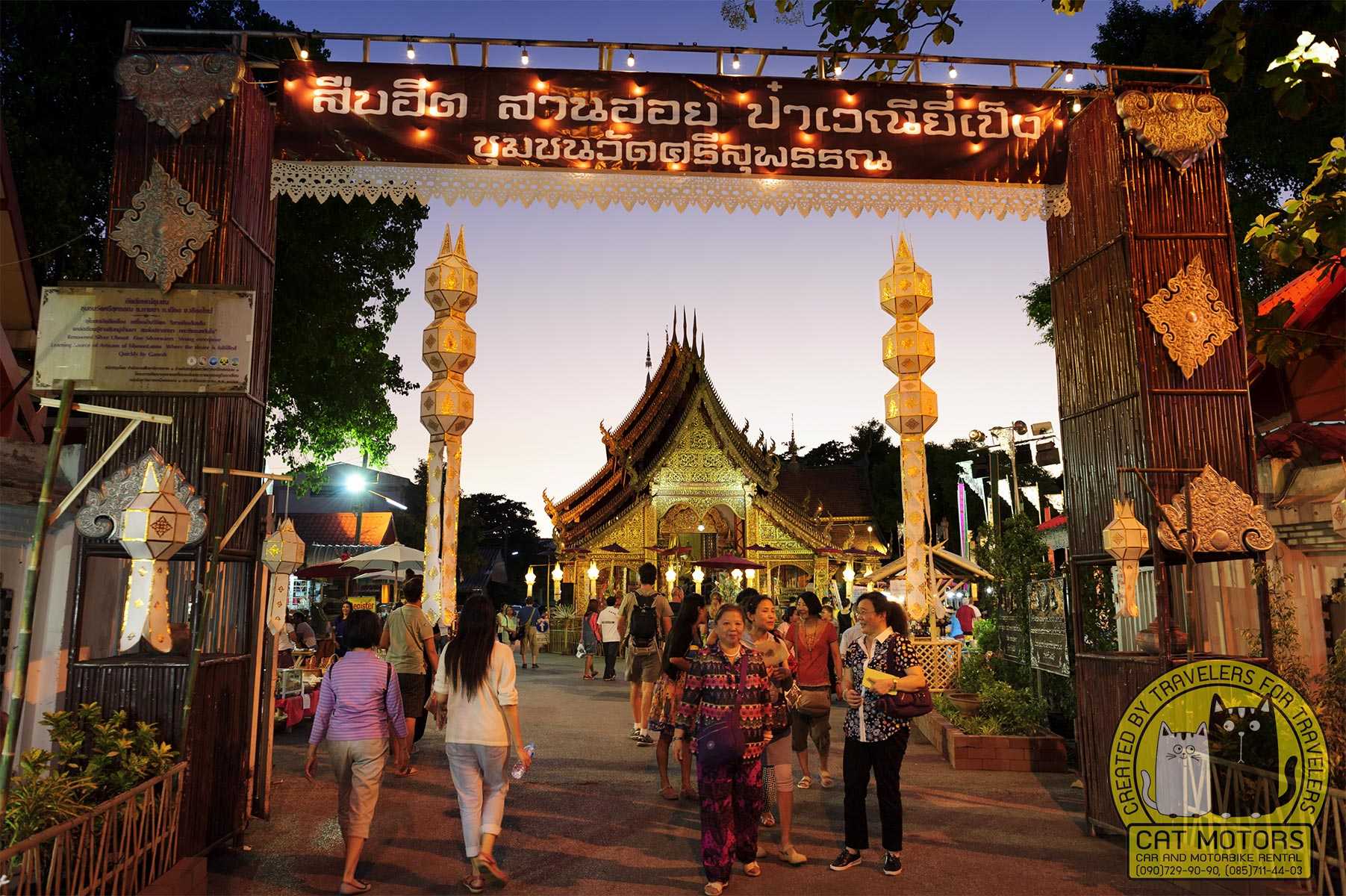
Weekday morning (recommended for most visitors)
Arrive between 8:00 and 10:00 AM on any weekday. The main reasons:
- The ordination hall is open and lit by morning sun through the eastern doors
- The silversmiths in the workshop are usually working from around 8:00 onwards
- Tour buses do not arrive at this temple in significant numbers. The few that do come arrive after 10:30 AM, so an early start avoids them entirely
- The 50 THB ticket is valid for the whole day, so you can leave and come back if you want to combine it with lunch in the Wua Lai area
Saturday plan: morning at the temple, evening at the Walking Street
Saturday allows a single-day plan that uses the area twice. Visit the temple from about 9:00 to 10:30 AM, when it is calm. Spend the rest of the day elsewhere, in the Old City, at lunch, in an afternoon café. Return to Wua Lai Road in the late afternoon, around 4:00 to 5:00 PM, when the Walking Street vendors begin setting up. The market runs from about 4:00 PM until midnight along the same stretch of Wua Lai Road, with food, crafts, silver shops, and the entire neighborhood in motion. Your morning ticket is still valid if you want to look at the silver hall lit up at night, which it is, until 9:30 PM.
What to avoid
Avoid late-afternoon arrivals on weekdays, when the ordination hall closes at 5:00 PM and you lose access to the inside. Avoid Sunday if your reason for coming is the Walking Street: the Wualai market is on Saturday only; the famous Sunday Walking Street is in the Old City around Tha Phae Gate, which is a different market entirely. Avoid the middle of the day in March and April, which is the hottest part of the year in Chiang Mai and the courtyard offers no shade.
How to get to Wat Sri Suphan from the Old City
Wat Sri Suphan sits on Wua Lai Road in the Hai Ya subdistrict, about 600 meters south of Chiang Mai Gate (Pratu Chiang Mai): an 8-minute walk, a 5-minute songthaew or motorbike ride, or roughly 80 baht in a Grab car from most points inside the Old City. The temple address is 100 Wua Lai Road, and the entrance to the ordination hall is between Soi 2 and Soi 3.
On foot
Walk south from Chiang Mai Gate along Wua Lai Road. The road runs straight south from the gate. Continue past the first few shops and silver workshops; the temple is on the right side of the road, set back slightly behind a low wall. Total distance: about 600 meters. Walking time: 8 to 10 minutes at an unhurried pace. There is no shade for most of the walk, so this is more comfortable in the morning than at midday.
By red songthaew
Stand on the south side of Chiang Mai Gate facing the gate, wave down any red songthaew, and tell the driver “Wat Sri Suphan.” The fare is normally 30 baht per person inside the city. The ride takes 4 to 6 minutes depending on the lights along Bumrungburi Road and Wua Lai Road.
By Grab or rented motorbike
Grab from the Old City to Wat Sri Suphan typically costs 60 to 90 baht and takes 5 to 8 minutes. If you are renting a motorbike from any of the shops along Mun Mueang Road or near Tha Phae Gate, the ride is about the same time and there is parking inside the temple grounds, accessible from Wua Lai Soi 2 or Soi 3. Parking is free.
Wat Sri Suphan admission, hours and dress code
The temple grounds at Wat Sri Suphan are free to enter; the ordination hall itself charges 50 THB admission and is open from approximately 6:00 AM to 5:00 PM, with the rest of the grounds open until 6:00 PM on most days and until 9:30 PM on Saturdays during the Walking Street market. Standard Thai temple dress code applies: shoulders and knees covered for both men and women.
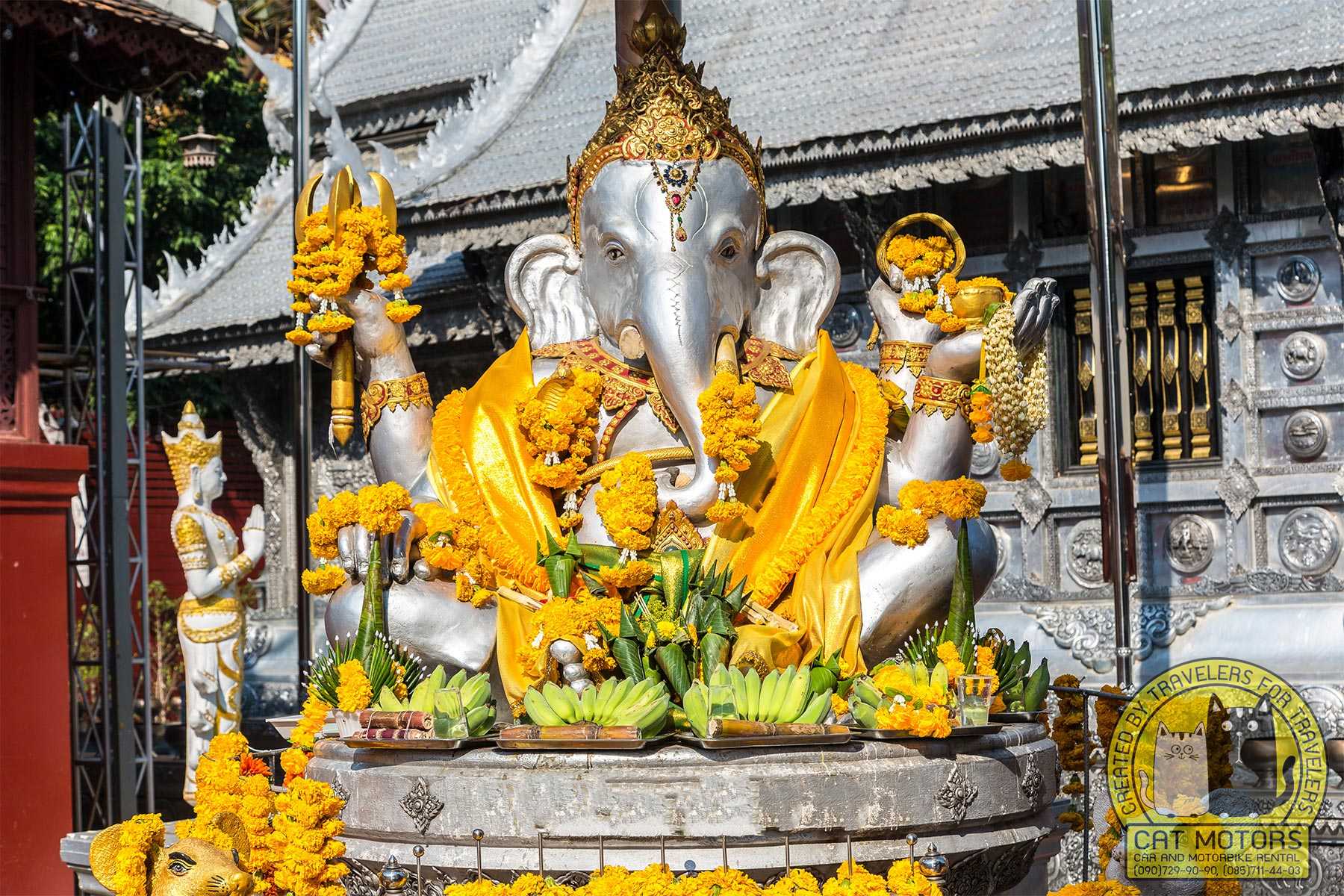
Admission
- Temple grounds: free
- Ordination hall: 50 THB per person
- The 50 THB ticket is valid for the entire day, including a return visit in the evening on Saturdays
- The ticket usually includes a small souvenir keychain and a bottle of water
- No advance booking required; tickets are bought at the hall entrance on arrival
- Wat Muen San (the second silver temple, 300 meters south): free
Hours
- Monday to Friday and Sunday: grounds open from approximately 6:00 AM to 6:00 PM
- Saturday: grounds open from approximately 6:00 AM to 9:30 PM (extended for the Walking Street)
- Ordination hall: 6:00 AM to 5:00 PM, every day
- Workshop and Learning Center: typically 8:00 AM to around 5:00 PM, less reliable on Sundays
Dress code
Shoulders covered. Knees covered. This applies to both men and women, and it applies anywhere on the grounds, not only inside the buildings. Sarongs are not provided at the entrance, so wear something appropriate or carry a wrap. Shoes off before entering the ordination hall, the viharn, or any other building with a raised floor. Hats off inside the buildings.
One restriction worth repeating
Women are not allowed inside the ordination hall. The full explanation, including why this is a Lanna folk belief and not a Buddhist rule, is above. The rest of the temple, including the viharn, the workshop, the Learning Center, the chedi, and the entire grounds, is open to everyone.
The point of going early is the same point the place itself is making. At eight in the morning the courtyard is empty, the silver hall doors are open, and the steady tap from the workshop along the eastern wall is the only sound on the grounds. The men in there were at their stools before you finished your coffee, and they will still be there when you leave. They have been hammering aluminum into the shape of the Buddha’s previous lives for most of their working lives, and the building you came to see is what twelve years of that work looks like. Whether the metal is silver or not is, in the end, the least interesting question you can ask about it.


