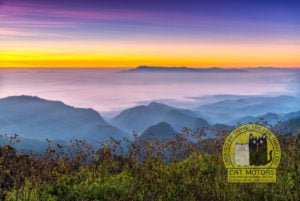
From anywhere in Chiang Mai, if you look west, you will see Doi Suthep. The mountain rises 1,676 meters above sea level, its forested flanks turning from green to blue to purple as the day progresses. Somewhere up there, hidden in the trees until you round the final bend, sits a temple that has watched over this city for six centuries. The locals do not need to see it to know it is there. They grew up with the mountain in their peripheral vision, a constant presence like the smell of jasmine or the sound of temple bells at dawn.
Contents
show
The road up takes about forty minutes by motorbike from the old city, eleven and a half kilometers of curves that begin at the zoo and end at the royal palace. In 1934, a monk named Kruba Sriwichai organized the construction of this road using volunteer labor from villages across the north. Before that, pilgrims walked. The road changed everything, but the temple kept its character. Even now, with tour buses disgorging visitors every twenty minutes, Wat Phra That Doi Suthep remains a place where people come to pray rather than merely photograph.
Doi Suthep is only 15 kilometers from the city center, but getting there on your own schedule — especially for sunrise or late afternoon when the crowds thin out — makes all the difference. Our motorbike rental in Chiang Mai lets you ride up the winding mountain road at your own pace, with the option to stop at Wat Pha Lat and the Doi Suthep viewpoint along the way.
A White Elephant’s Final Walk
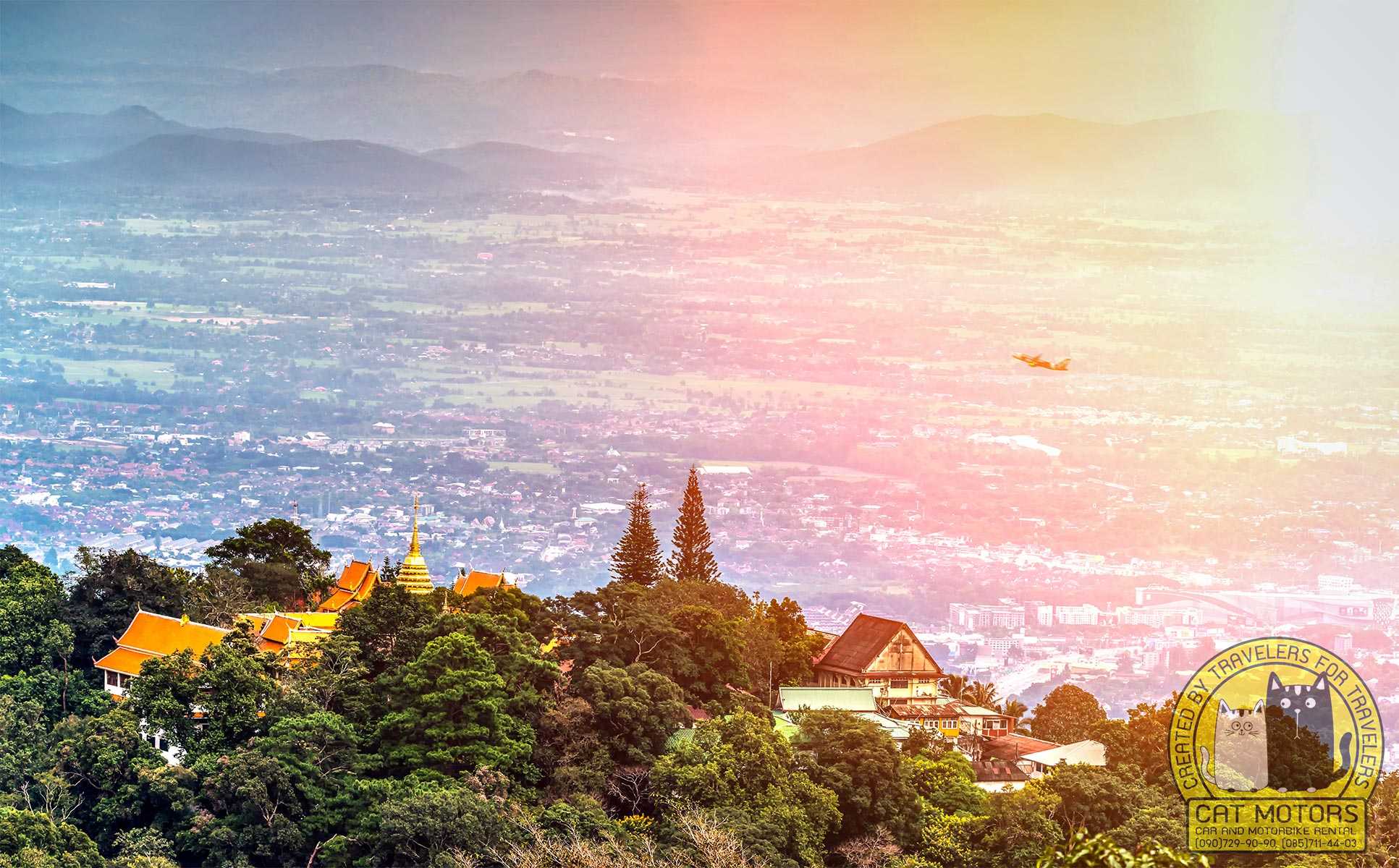
The temple exists because of an elephant, or so the story goes. In the fourteenth century, King Kue Na of the Lanna Kingdom came into possession of a Buddha relic from Si Satchanalai. The relic had been divided into two portions. One remained at Wat Suan Dok in the city, where it sits to this day in a white chedi surrounded by smaller stupas containing the ashes of Chiang Mai’s royal family. The other portion presented a problem: where should it be enshrined?
The king, uncertain, placed the relic on the back of a white elephant and let the animal choose. White elephants in Thai tradition are not merely rare animals but sacred beings, their appearance considered an auspicious sign for the kingdom. This particular elephant walked east from the city, crossed the Mae Ping River, and began climbing the mountain. It did not stop to rest. It did not turn back. At the summit, it circled three times in the clockwise direction that Buddhists use for circumambulation, trumpeted once, and died.
King Kue Na took this as a sign. He ordered a chedi built on the spot, and the relic was interred beneath it. The hermit who lived on the mountain at the time, a man called Sudeva (rendered in Thai as Suthep), gave his name to the peak. Whether any of this actually happened is beside the point. The story explains why the temple feels inevitable, why it could not be anywhere else. The elephant knew. The mountain accepted. What more authorization does a holy site need?
The Mangrai Dynasty, which ruled the Lanna Kingdom from the thirteenth century until its absorption into Siam, left temples scattered across northern Thailand. Most are modest affairs, brick and stucco structures that appear on no tourist itinerary. Doi Suthep was different from the beginning. Its elevation set it apart, literally above everything else. The difficulty of reaching it made pilgrimage meaningful. And the relic gave it a direct connection to the historical Buddha that few temples could claim.
306 Steps or the Easy Way
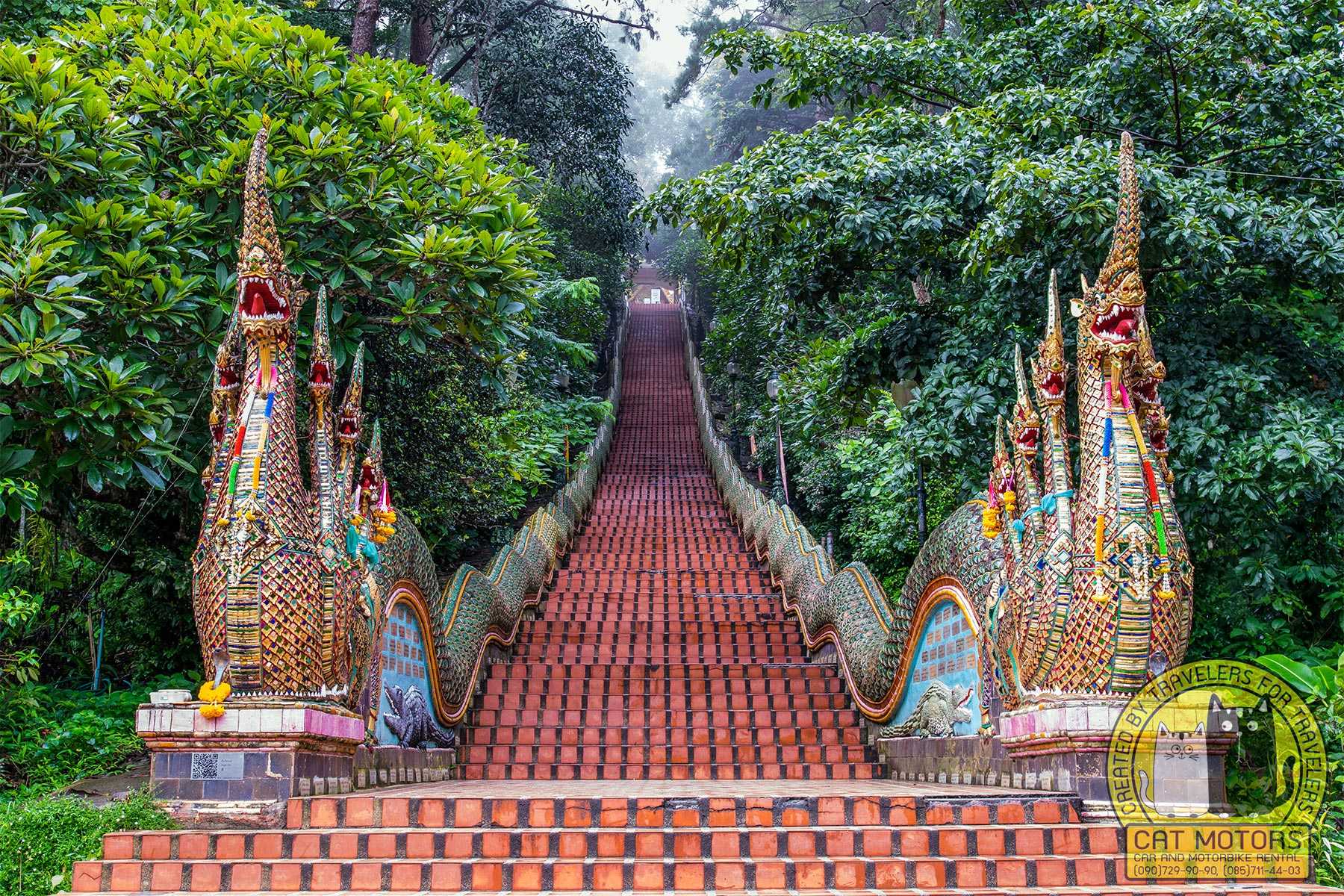
At the base of the temple complex, visitors face a choice. The naga staircase rises sharply through the trees, its 306 steps flanked by serpent balustrades whose green and gold scales glitter in whatever light filters through the canopy. The climb takes five to ten minutes depending on your pace and the heat, which even at this elevation can be considerable between March and May.
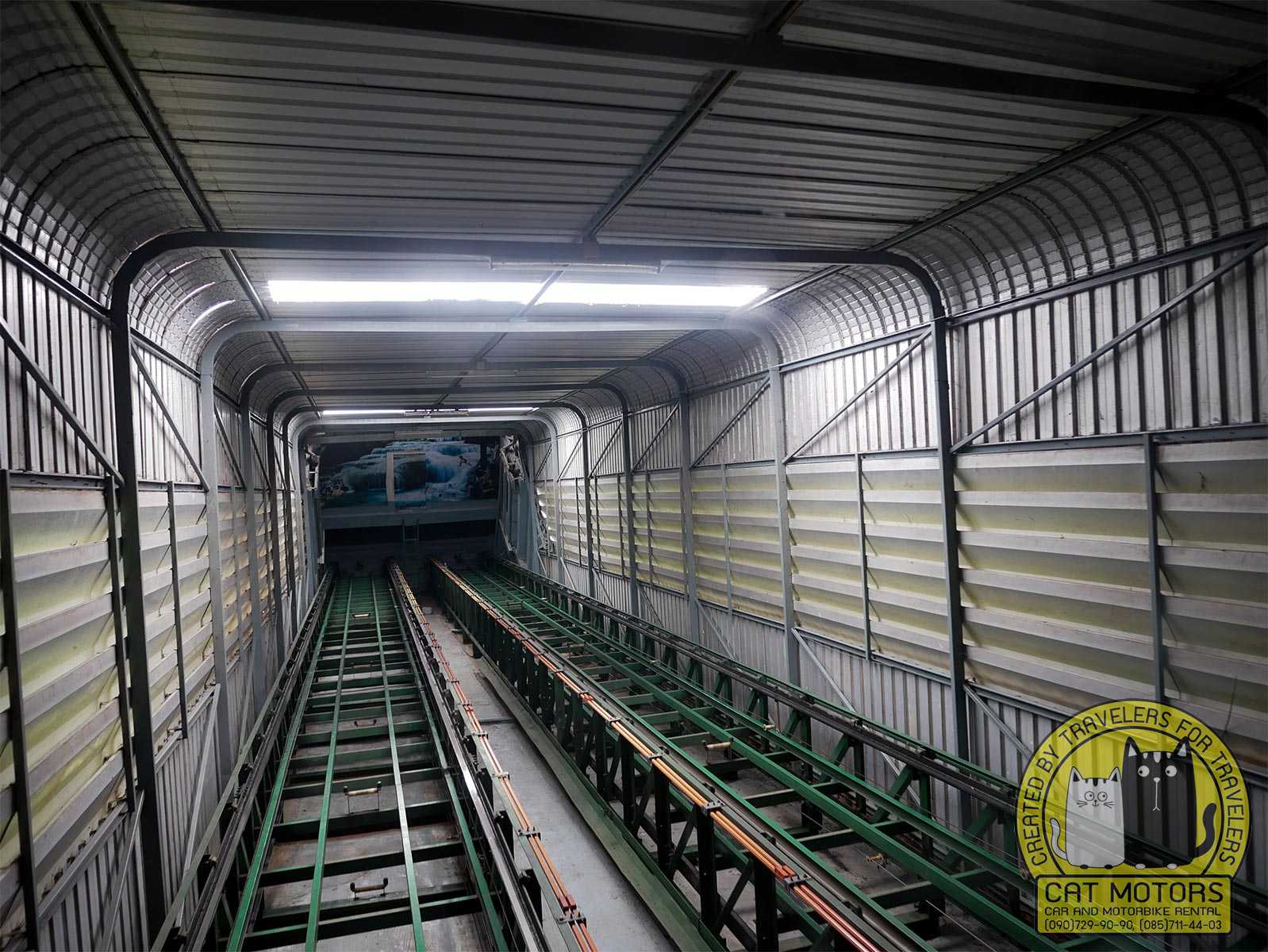
The alternative is a cable car that deposits you near the top for 50 baht. Thai nationals pay 20 baht, a dual pricing system common throughout the country. The car runs from six in the morning until six in the evening. Most visitors who arrive by motorbike take the stairs going up and the cable car coming down, their legs having made their point.
The staircase itself dates to 1557, built by a monk from Lamphun who wanted to make pilgrimage easier. Before that, there was only a footpath through the jungle. The nagas – seven-headed serpents from Buddhist and Hindu mythology – were added later. They photograph well, especially in the late afternoon when the light comes in sideways and the heads seem to glow.
Inside the Temple Walls
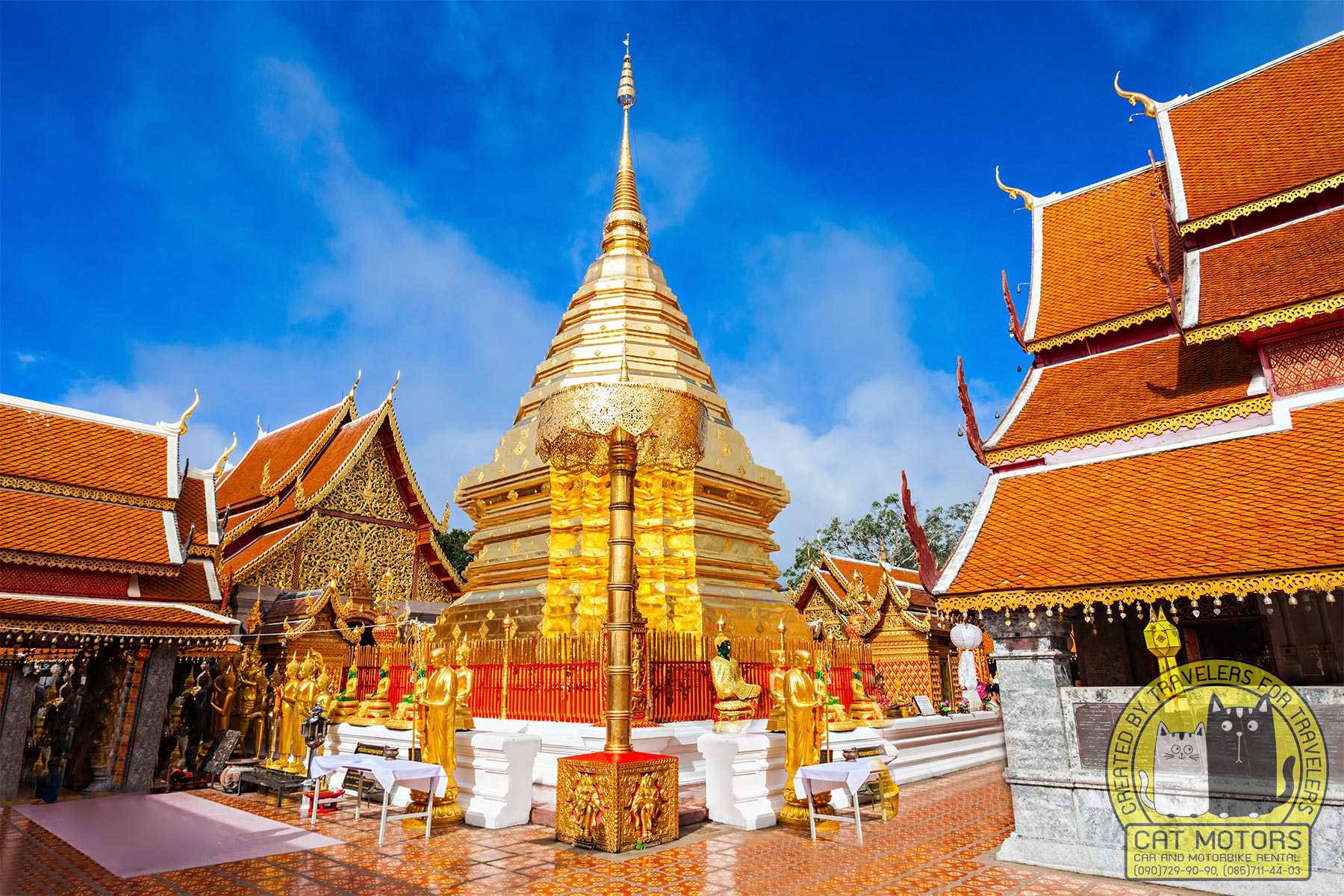
The temple compound is smaller than photographs suggest. This surprises nearly everyone who visits, conditioned by wide-angle lens distortions that make the space appear vast. In reality, you can walk its perimeter in two minutes. The compression works in the temple’s favor. Everything feels close, immediate, slightly overwhelming. Incense smoke has nowhere to disperse. Chanting echoes off stone walls. The golden chedi dominates not because of its size but because there is nothing else to look at.
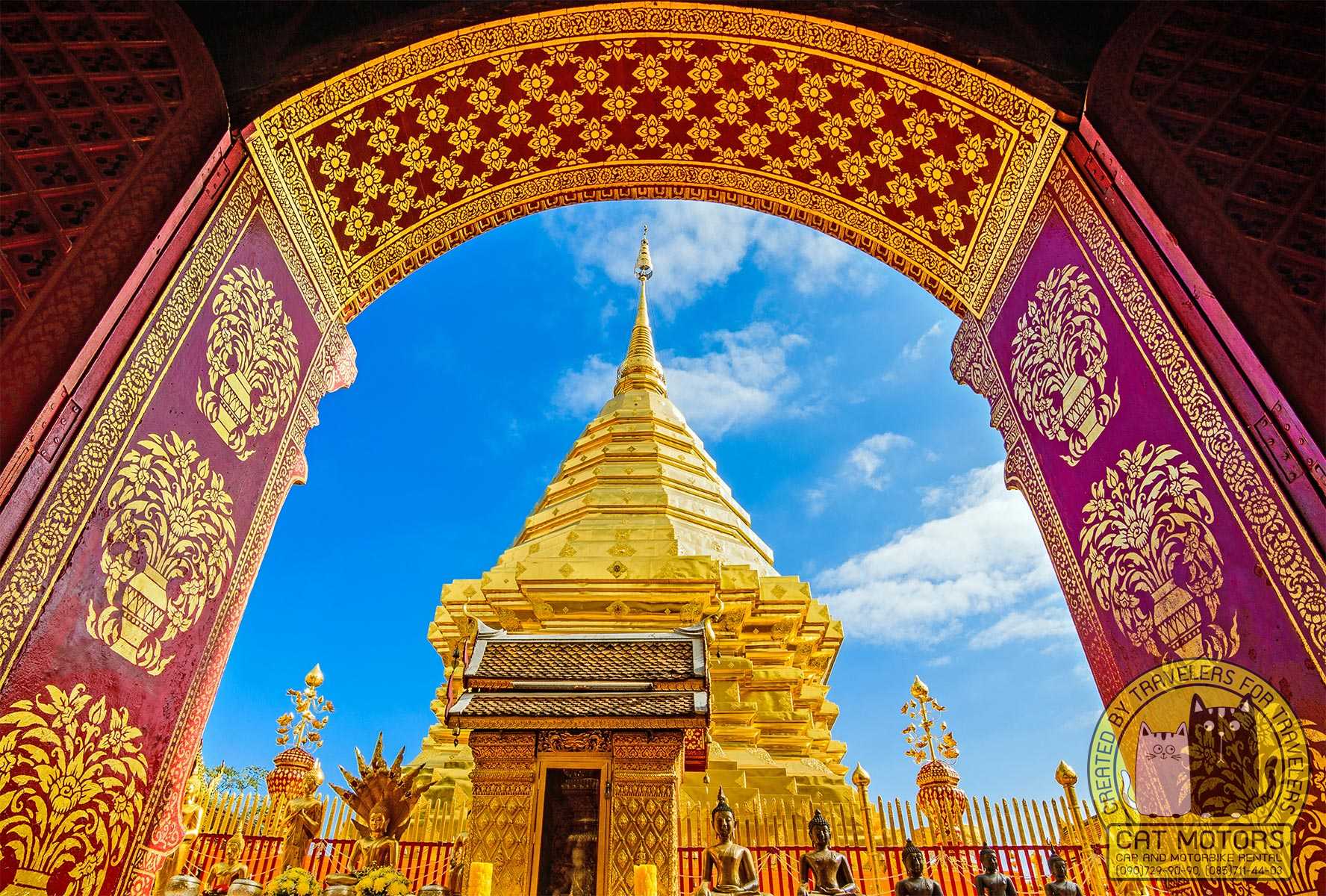
The chedi itself is a Chiang Saen-style stupa, an architectural form that originated in the Mekong River region and spread throughout the Lanna Kingdom. Its distinguishing features include a high base, an octagonal bell-shaped body, and a tapering spire. This particular example is covered in two layers of Thong Changko, thin sheets of brass that were hammered into place by craftsmen whose names no one recorded. Beneath the chedi, underground, rest the relics that the elephant carried here six centuries ago.
The faithful circle the structure clockwise, a practice called pradakshina that appears in Buddhist, Hindu, and Jain traditions. Some carry lotus flowers, their pink petals already wilting in the heat. Others hold bundles of incense that trail thin lines of smoke. Many simply walk with their palms pressed together at chest height, eyes forward, lips moving silently. Tourists weave between them, phones raised, uncertain whether they are witnessing something private.
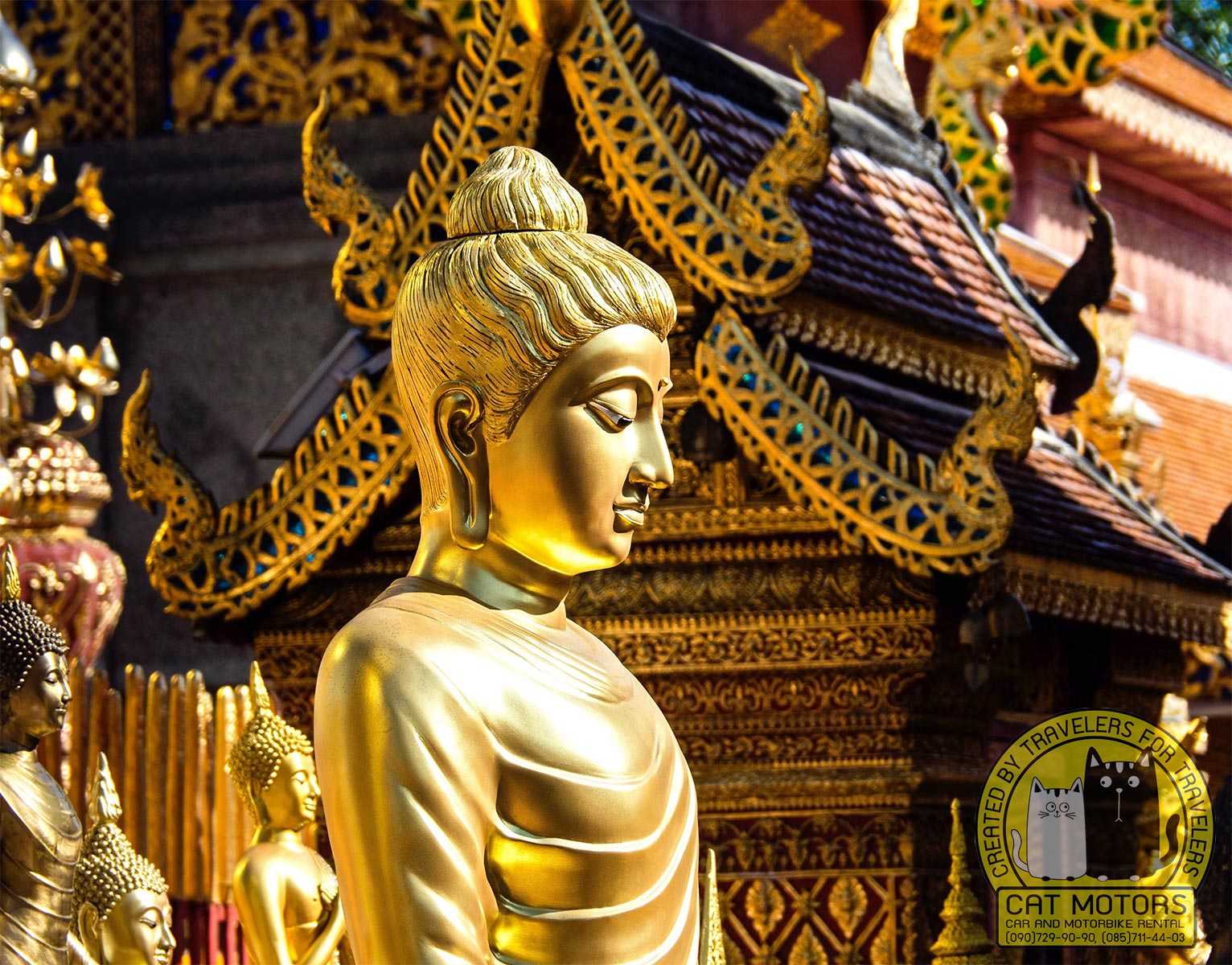
Around the chedi, the compound holds a series of smaller shrines housing Buddha images in various postures: the earth-touching gesture of enlightenment, the meditation pose, the reclining position of final nirvana. An emerald Buddha sits in one pavilion, a copy of the famous image in Bangkok’s Grand Palace. Another shrine contains a standing Buddha covered entirely in gold leaf applied by worshippers over decades. The accumulation has given the figure a lumpy, almost organic texture, like something grown rather than made.
The terrace on the eastern side looks out over the city. On clear days, which are rare from February through April when smoke from agricultural burning fills the valley, you can see the grid of streets, the silver roofs of temples, and the brown thread of the Ping River winding south toward Lamphun. On hazy days, which are most days in high season, you see white. The city exists as an idea rather than a visible fact, its presence confirmed only by the faint sound of traffic rising from below.
The dress code is enforced at the entrance by attendants who have seen every possible violation and are no longer impressed by excuses. Shoulders and knees must be covered, and this applies to everyone regardless of gender. Sarongs are available for rent near the ticket booth if you arrive in shorts, typically 20 baht for the duration of your visit. Shoes come off before you step onto the marble floors of the inner compound. There are racks, or you can carry them in a bag. The marble gets hot by midday. Some people hop. Others develop a quick, shuffling gait that minimizes contact time.
Worship by the Cardinal Points
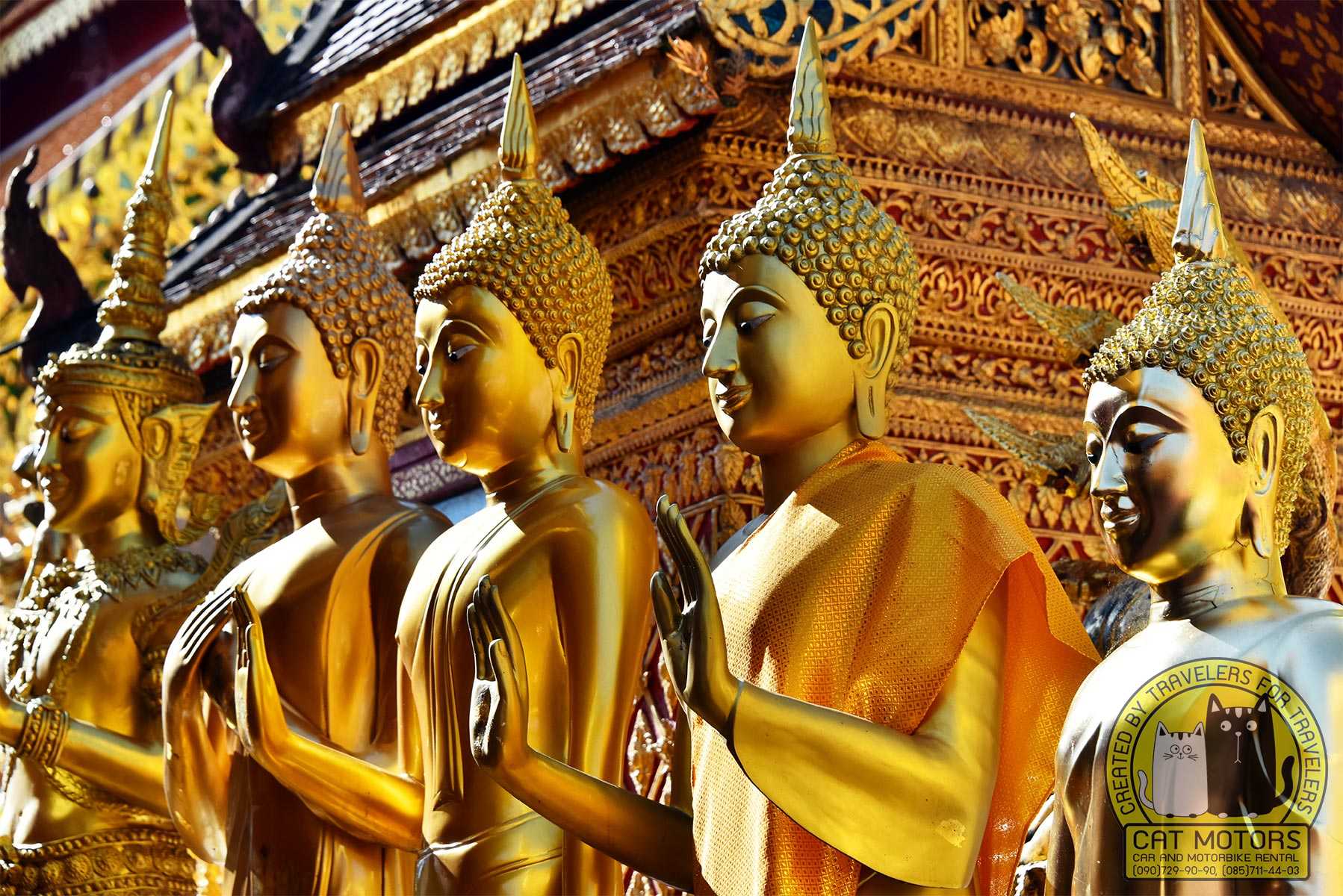
Thai Buddhists approach the chedi differently depending on what they seek. Each cardinal direction corresponds to a different blessing. The north side is for wisdom, associated in Thai belief with the full moon’s clarity. The south is for those who wish to ordain as monks. The east promises a favorable rebirth. The west is simply considered the most auspicious spot, the direction to face when you have no specific request but want the relic to know you came.
The traditional offering includes dok mai (flowers), thoop (incense), thian (candles), and khao tok (popped rice). These can be purchased at stalls near the entrance for 20 to 50 baht depending on how elaborate a set you want. The ritual involves walking three times clockwise around the chedi while holding the offerings, then placing them at one of the shrines. Monks are present but do not typically interact with tourists unless approached. Women should not touch monks or hand them objects directly.
The Pilgrimage Walk
Once a year, the night before Visakha Bucha Day (the full moon of the sixth lunar month, usually in May), thousands of people walk the entire eleven kilometers from the city to the temple. They carry candles. The procession begins at dusk and arrives at the temple before dawn, timing the final climb to coincide with the first light. Along the way, locals set up stations offering water and food to the walkers, a form of merit-making that has become as much a part of the tradition as the walk itself.
The crowd is mostly Thai, with a scattering of long-term residents and tourists who happened to be in town and heard about it. Children walk alongside grandparents. Young couples hold hands. Monks walk in small groups, their robes moving through the candlelit darkness like saffron ghosts. The atmosphere is festive but not rowdy, a collective undertaking that feels both ancient and immediate.
Participating requires no registration or permission. You simply show up at the starting point near Chiang Mai University and join the crowd. The pace is slow, governed by the oldest and youngest participants. Stopping is expected, even encouraged. People sit on curbs, accept cups of water, chat with strangers, then rise and continue. No one hurries. The point is not to finish but to walk.
The final approach, ascending the mountain road as the sky lightens from black to gray to pink, is the part people remember. Exhaustion mixes with anticipation. The temple appears above, its golden chedi catching the first rays of sun. The walkers climb the naga staircase together, their candles now extinguished but still warm in their hands. By the time they reach the top, the temple is full of people who arrived the same way, all of them slightly dazed, slightly exalted, bound together by eleven kilometers of shared effort.
It is, by any measure, one of the most remarkable things you can do in northern Thailand, and it costs nothing. The date varies by lunar calendar, so check before you plan. The walk happens regardless of weather, though rain makes the road slippery and the experience considerably more challenging.
The Monk Who Built the Road
At the foot of the mountain, before the road begins its climb, stands a statue of Kruba Sriwichai. He sits cross-legged in bronze, his face serene, birds occasionally perching on his head. Locals stop here before ascending, pressing their palms together and bowing. Some leave flowers or small offerings.
Kruba Sriwichai was a wandering monk from Lamphun province who became, in the 1930s, something like a folk hero. The colonial government viewed him with suspicion. The Sangha, Thailand’s official Buddhist hierarchy, tried repeatedly to defrock him. Yet ordinary people followed him in enormous numbers, volunteering their labor for projects he organized across the north. The Doi Suthep road was his most ambitious undertaking. It took five months and involved workers from every province in the region, none of them paid.
He died in 1938, four years after the road’s completion. The temple at the top had existed for six hundred years before him, but he gave it something it lacked: accessibility. Now anyone with a motorbike and forty minutes can reach what was once a journey of several days.
Timing Your Visit
The temple opens at 6:00 and closes at 18:00. Admission is 30 baht for foreigners. The best time to arrive is either early morning, before the tour buses, or late afternoon, when the light softens and the crowds thin. Midday visits during hot season are an exercise in endurance. The marble burns, the brass blinds, and the cable car line stretches down the stairs.
Early morning has its own rewards beyond the absence of crowds. Monks conduct their morning rituals in the hours after dawn, and you may witness chanting that is not staged for visitors but simply part of the temple’s daily rhythm. Mist often settles in the surrounding forest, burning off as the sun rises. The air is cool enough to make the climb comfortable. By ten o’clock, the tour buses begin arriving from hotels downtown, and the character of the place changes.
Late afternoon offers different pleasures. The light turns golden, making the chedi glow rather than glare. Shadows lengthen across the compound. Many day-trippers have already descended, leaving space to sit on the terrace and watch the city below fade into dusk. The descent afterward, riding down the mountain as the temperature drops and the headlight picks out the curves ahead, is one of the small satisfactions of traveling by motorbike.
The Road Itself
The road deserves attention as more than a means of reaching the temple. It curves constantly, climbing through forest that thickens as you ascend. The gradient varies, steep in places, gentle in others, demanding attention but never becoming technical in the way that mountain roads farther north can be. For riders new to Thailand or to motorbikes in general, it serves as a useful introduction to hill riding without the exposure of a Mae Hong Son Loop or the traffic chaos of the Samoeng route on weekends.
The surface is excellent throughout, maintained by the national park service and the steady revenue of tourist traffic. Guardrails appear where the drop is significant, though they would not stop a heavy vehicle. Speed bumps slow traffic near the viewpoints, where vendors sell fruit, cold drinks, and souvenirs to people who have stopped to photograph the city below. The viewpoints themselves have been colonized so thoroughly by commerce that the view is almost secondary to the transaction.
The real pleasure is the riding: cool air replacing the valley’s heat, the engine note changing as the gradient steepens, the city disappearing behind you curve by curve. Near the top, you pass through a stretch of old-growth forest where the canopy closes overhead and the temperature drops noticeably. Monkeys sometimes sit at the roadside, watching traffic with the bored expression of creatures who have learned that tourists do not carry food worth stealing.
Police occasionally set up checkpoints along this road, though less frequently than on routes leading out of the city. They are looking for unlicensed riders and, during holiday periods, drunk drivers descending after temple visits that included alcohol brought from home. An international driving permit and a helmet will see you through without difficulty.
On the way down, consider stopping at the Kruba Sriwichai monument not because any guidebook says you should, but because the man deserves acknowledgment. Without him, you would be walking. The bronze statue sits at a small plaza with parking, usually quiet except for the occasional Thai visitor leaving flowers. It takes five minutes. The mountain rises behind you. The city spreads below. And you understand, briefly, why people kept building temples on hills they had no easy way to reach.
Quick Reference
Location: 15 km west of Chiang Mai city center, via Huay Kaew Road
Elevation: 1,046 meters above sea level (689 meters above the Chiang Mai plain)
Hours: 06:00 – 18:00 daily
Admission: 30 baht (foreigners)
Naga staircase: 306 steps, 5-10 minutes
Cable car: 50 baht roundtrip (foreigners), 20 baht (Thai nationals)
Dress code: Shoulders and knees covered; sarongs available for rent at entrance
Riding time from old city: 35-45 minutes
Road distance: 11.53 km from Chiang Mai Zoo to temple parking
Best months: November – January (cool, clear); avoid February – April (burning season haze)
Visakha Bucha pilgrimage: Night before full moon in May; starts near Chiang Mai University at dusk