
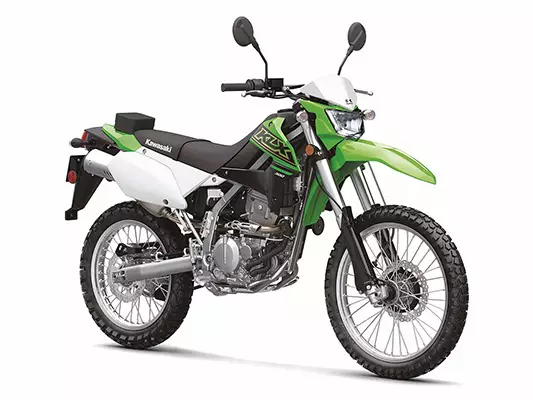
The Kawasaki KLX300 is a lightweight enduro that shows how one motorcycle can transition seamlessly from weekday commuting to weekend trail exploration. In our enduro rental catalog it is presented as a reference for riders comparing versatile dual-sports that balance city practicality with real off-road potential. Its 292 cc single-cylinder engine is tuned for tractable torque, giving riders confidence on steep climbs, gravel tracks, and dirt paths, while still being smooth enough for navigating urban congestion. The tall suspension travel and slim chassis make it easy to stand on the pegs and ride over uneven ground without losing balance. Upright ergonomics and a narrow profile keep it maneuverable in traffic and comfortable for medium distances. For less experienced riders, the KLX300 demonstrates how approachable a true enduro can be, while advanced riders appreciate its light weight for exploring unpaved side roads. For visitors in Northern Thailand, it sets a clear standard of what a small-capacity enduro can deliver when combining daily rides with off-road adventures.
⚠️ This card is an informational overview of the model. Availability in our fleet may vary — please check the main page for up-to-date motorcycles currently offered.
Trails north of town mix old logging cuts, terrace access tracks, and shaded clay that turns slick when rain hits. The KLX300’s light front end helps loft over rain bars and shallow ruts; clutch control at walking pace is friendly for threading rock steps without stalling. EFI copes well with altitude changes across ridge lines, so throttle stays clean as temperatures swing between sun and forest shade. The 21/18 wheelset gives tire choice freedom: a mild knobby handles gravel and hardpack; a more aggressive rear bites better on wet laterite. For stream entries, aim for upstream angles that avoid big round stones, keep momentum steady, and resist grabbing the front brake until the exit bank firms up.
Bike setup focuses on protection and resilience. A skid plate, wrap-hand guards, and simple radiator guards pay for themselves on first contact with rocks or bamboo. Rear preload set for sag with water, tools, and tubes keeps geometry neutral; too soft and the front wanders on gravel, too firm and traction suffers on roots. The stock seat is slim to allow body English; many riders add a compact foam pad for the paved liaison back to town. Fuel capacity is the limiting factor on very remote branches; a 1-liter bottle in a heat-resistant holder extends options to reach the next shop selling petrol in glass. End-of-day checks—spokes, chain slack, axle pinch bolts—catch vibration-loosened fasteners before they become trail failures. Ride etiquette matters on single-track: kill speed early for oncoming pickups and be ready to help close any farm gates you pass.
Pros and Cons
✅ Light, precise chassis that rewards careful line choice
✅ Strong aftermarket for guards, racks, and tire options
✅ EFI tolerates altitude and temperature swings well
❌ Small tank constrains exploratory spurs without extra fuel
❌ Seat comfort limited on long paved liaisons
❌ Vibration noticeable at sustained highway speeds