
Last updated: May 2026
Contents
show
Chiang Mai Night Bazaar is worth visiting on weeknights when the Walking Streets are closed, but only if you pick the right zone for what you actually want. The bazaar is not one continuous market. It is three zones along Chang Khlan Road, each with a different purpose, price tier, and audience. Treat it as three separate stops and the evening works. Walk it end to end without a plan and you will leave thinking it was not worth the trip.
The reason this matters is structural. All three zones (the open-air street stalls, Kalare Night Bazaar, and Anusarn Market) sit under the same corporate owner, Asset World Corporation, which is mid-way through a multi-billion-baht transformation of the entire strip. The bazaar is tourist-oriented, and the pricing reflects that. Its Wongnai score (Thailand’s Yelp equivalent) sits at 3.6 out of 5, which is about right: a decent market aimed at foreign visitors, not a place locals come to shop. But it still delivers a solid evening if you know which zone to head for first.
If you are in Chiang Mai on a Sunday, skip the Night Bazaar and go to Sunday Walking Street on Ratchadamnoen Road instead. It draws more local shoppers, the craft quality is higher, and the prices are closer to what Thai consumers pay. The Night Bazaar wins on one thing the Walking Streets cannot match: it opens every single evening and pairs street food with live Muay Thai in a way no other Chiang Mai market does.
“The Night Bazaar is quieter than most guides suggest, especially on weeknights. Tuesday and Wednesday evenings are when I prefer coming here. The vendors are less hurried, the food stalls have shorter lines, and you can actually talk to the silversmiths in Kalare without being rushed along by the crowd behind you.” — Konstantin, Founder of Cat Motors Motorbike Rental
Is the Chiang Mai Night Bazaar Worth Visiting?
Chiang Mai Night Bazaar is worth your time on any non-Sunday evening, provided you go with realistic expectations about what it is: a tourist-oriented night market, not a local cultural experience. Most English-language guides describe the bazaar as popular with locals and tourists alike, which is misleading. Locals do not shop here. The 3.6 out of 5 Wongnai score reflects what anyone living in Chiang Mai already knows: this is a market built for foreign visitors, and its prices reflect that positioning.
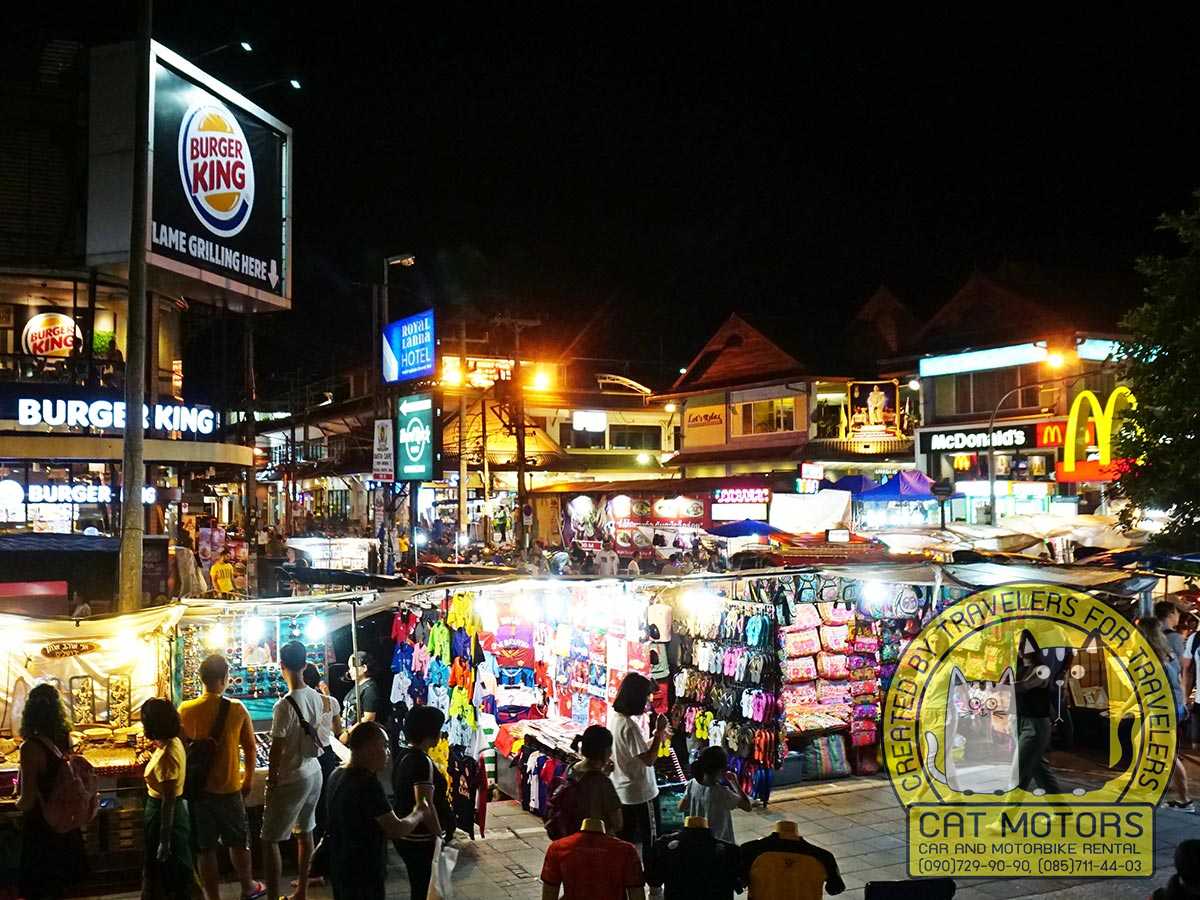
That does not make it a bad evening. The Night Bazaar offers daily availability that no other Chiang Mai market can match. Sunday Walking Street on Ratchadamnoen Road is widely considered the better market for authentic crafts and local atmosphere, but it operates one evening per week. Saturday Walking Street on Wua Lai Road is smaller, more local, and runs only on Saturdays. If your Chiang Mai schedule lands you on a Tuesday or Thursday, the Night Bazaar is your option, and it is a decent one when approached with a zone strategy.
On Saturday and Sunday evenings, the Night Bazaar is noticeably emptier because most tourists shift to the Walking Streets. For those who dislike crowds, the bazaar on a weekend evening can feel like a different market entirely.
Night Bazaar or Sunday Walking Street?
If you have a Sunday evening free and have not yet visited Sunday Walking Street, go there. It draws a mixed crowd of Thai families and tourists, the craft quality is higher, and prices sit closer to local rates. The Night Bazaar’s advantage is structural, not qualitative: it runs seven nights a week and offers entertainment that Walking Streets do not. Muay Thai at Kalare Boxing Stadium starts at 21:00 Monday through Saturday. Occasional fire shows fill the gaps between bouts.
For travelers staying multiple nights, the practical approach is to save Sunday for Walking Street and visit Night Bazaar on a weeknight when you want an easy evening plan within walking distance of the Old City. Saturday Walking Street on Wua Lai Road operates on the same principle but skews even more local. If both Saturday and Sunday are available, those markets are the stronger choices for handicrafts. The Night Bazaar fills the remaining five nights.
Three Zones Inside the Night Bazaar
The Night Bazaar is not one market but three zones under single corporate ownership, each serving a different purpose and price tier. Asset World Corporation consolidated at least seven land parcels along Chang Khlan Road after the COVID period, bringing the street stalls, Kalare Night Bazaar, Anusarn Market, Night Bazaar Shopping Centre, and Plaza Chiang Mai under one portfolio. Most English-language guides still describe these as separate, independent markets. They are not. The entire strip shares the same corporate direction under AWC’s Lannatique redevelopment.
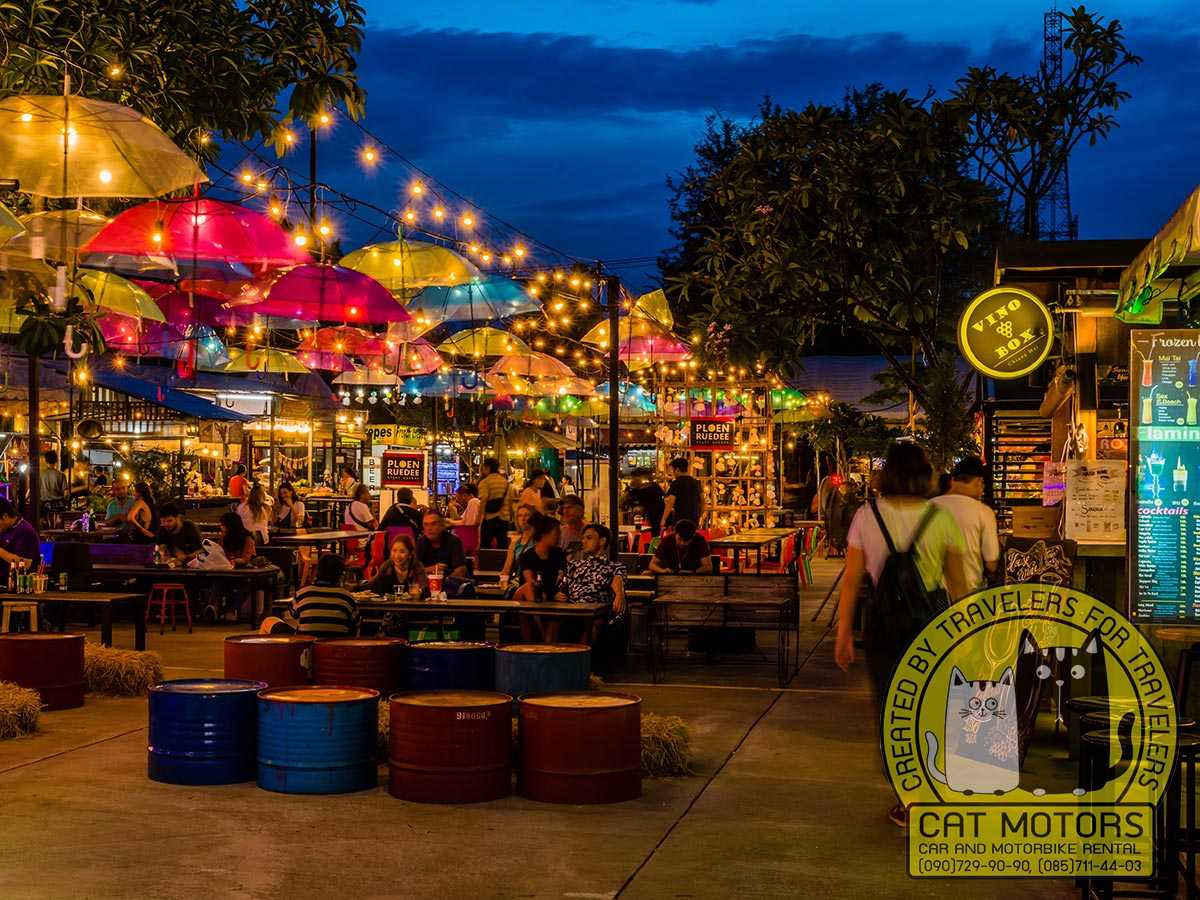
This ownership structure explains why the zones feel interconnected yet distinct. Knowing it helps you choose where to spend your time instead of walking the full kilometer of Chang Khlan Road hoping something interesting will appear.
Chang Khlan Road Street Stalls
The outdoor stalls on Chang Khlan Road are what most visitors encounter first, and many mistake them for the entire Night Bazaar. This stretch of roughly one kilometer is the cheapest zone: street food runs 30 to 80 THB per dish, mala skewers go for 20 THB each, and souvenir prices start high but respond well to bargaining. The stalls sell a mix of clothing, phone cases, elephant pants, silk scarves, carved wood figures, and mass-produced souvenirs. The entire strip is open-air, so a rain shower sends everyone scattering under awnings and into Kalare.
Kalare Night Bazaar
Kalare is the zone you visit with a plan, not for casual strolling. This covered complex houses the Kalare Food Center with its prepaid coupon system, Kalare Boxing Stadium for Muay Thai, and a cluster of craft and clothing shops under a permanent roof. The atmosphere is more structured than the street outside: fixed shops rather than portable stalls, higher average prices, and an entertainment calendar that runs through midnight.
Kalare is the only zone where you can eat dinner at a food court, watch live Muay Thai starting at 21:00, and browse covered shops without worrying about weather. If you are planning a full evening at the Night Bazaar rather than a quick walk-through, Kalare is where to anchor your time.
Anusarn Market
Visitors who find Chang Khlan Road overwhelming will find Anusarn Market quieter and noticeably less aggressive in its hawking. Located adjacent to Kalare on the southern end, Anusarn evolved from a cluster of seafood restaurants into a covered market selling food, clothing, and home decor. The stalls skew slightly more toward Thai shoppers than the main street, though the difference is modest. After COVID, Anusarn reopened with fewer vendors but a calmer feel that works for travelers who prefer to browse without being called into every stall.
“I always start at Anusarn and walk north. It is the quieter end, you ease into the market instead of hitting the thickest crowd first. By the time you reach Kalare you have a sense of prices and what is actually worth buying, instead of overpaying at the first stall that catches your eye.” — Konstantin, Founder of Cat Motors Motorbike Rental
What to Buy at the Night Bazaar and How Much to Pay
Most street stall prices at the Night Bazaar are marked up 50 to 100 percent for tourists, and bargaining down to 50 to 70 percent of the asking price is standard practice. A silk scarf quoted at 300 THB should settle around 150 to 200 THB. A carved wooden elephant starting at 250 THB will typically close at 120 to 150 THB. T-shirts and elephant pants sit in the 99 to 199 THB range after negotiation. These benchmarks apply to Chang Khlan Road street stalls. Shops inside Kalare have fixed prices and less room for negotiation.
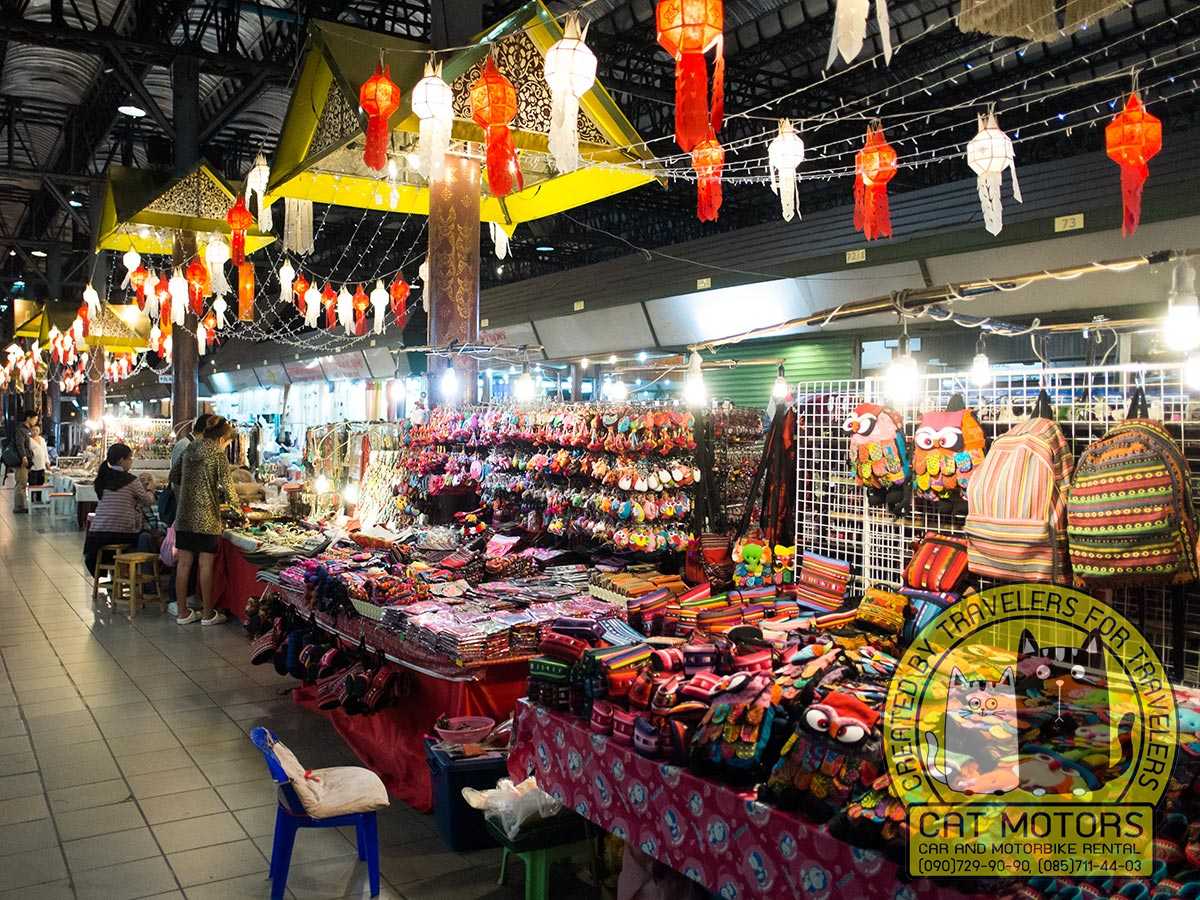
The product range across the bazaar is broad but repetitive. Expect to see the same elephant pants, scented soaps, Hill Tribe-style bags, lacquerware, and carved teak items across dozens of stalls. Northern Thai crafts rooted in the Lanna Kingdom tradition (silverwork, lacquerware, wood carving) appear alongside mass-produced items from factories elsewhere in Thailand. Distinguishing handmade from factory-made takes attention: heavier weight, rougher finishing, and higher asking prices usually signal genuine craft.
Bargaining Tips
Start by asking the price, then offer 40 to 50 percent of what the vendor quotes. The vendor will counter, and you meet somewhere in the 50 to 70 percent range. Walking away with a polite smile is the most effective technique: if the vendor calls you back with a lower price, you know you are close to the real number. If they let you go, you were already at the floor.
Bargaining is expected on Chang Khlan Road street stalls. It is not appropriate at Kalare Food Center (coupon-based, fixed pricing) or at most permanent shops inside Kalare. Do not bargain aggressively over small amounts. A 20 THB difference matters more to the vendor than to you.
Night Bazaar Food: What to Eat and Where
Street food on Chang Khlan Road costs 30 to 80 THB per dish, making it the cheapest eating option in the Night Bazaar area. Kalare Food Center inside the covered complex charges more but uses a prepaid coupon system that most guides do not explain clearly. The two serve different needs: the street is for cheap, fast, eat-while-you-walk meals; Kalare is for sitting down with a wider selection under a roof.
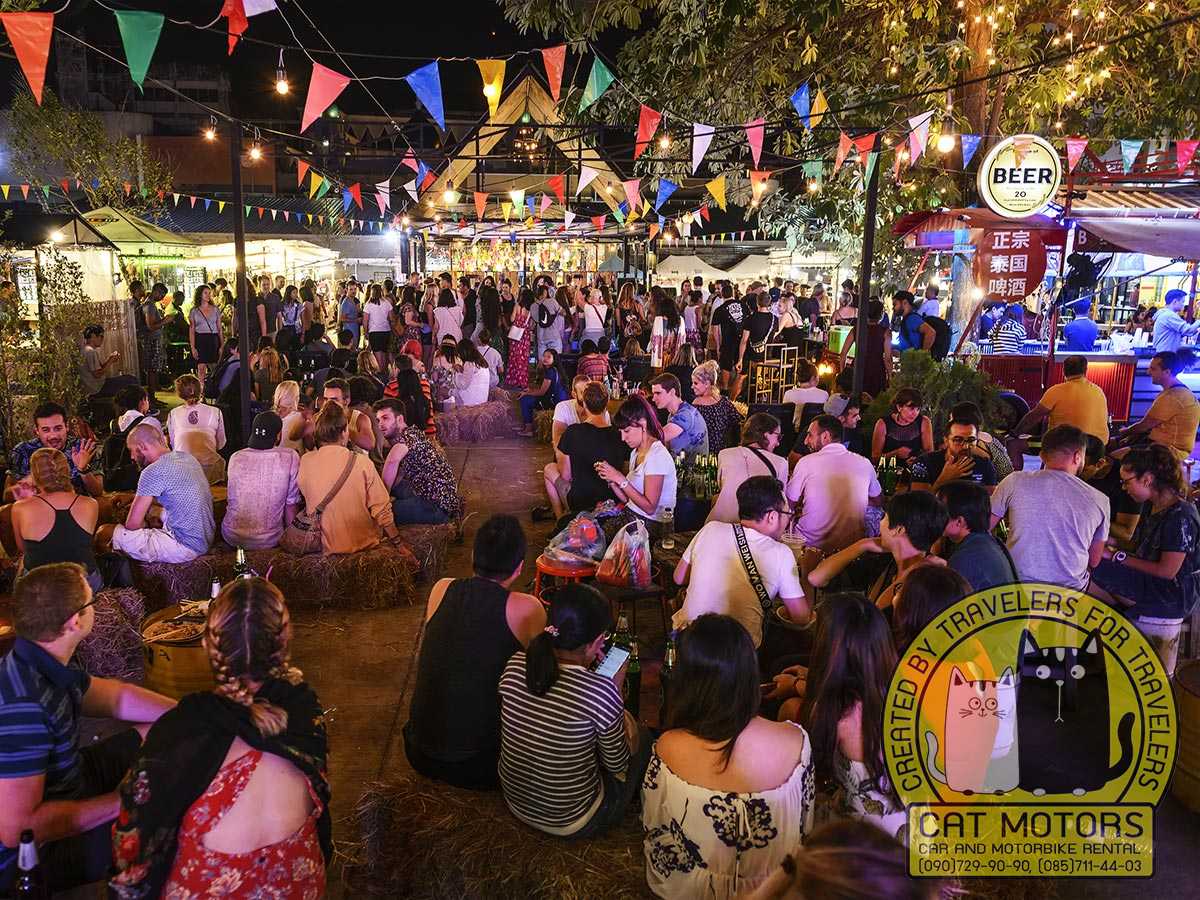
The dishes to prioritize are northern Thai specialties that Chiang Mai does better than anywhere else. Khao soi, the coconut curry noodle soup topped with crispy egg noodles, is Chiang Mai’s signature dish and available from multiple stalls along Chang Khlan Road. Sai oua, a grilled northern Thai pork sausage packed with lemongrass, galangal, and kaffir lime, is best from vendors cooking over charcoal rather than on a flat griddle. Mango sticky rice appears everywhere and makes a reliable dessert. Beyond the northern staples, the street stalls offer standard Thai night market fare: pad thai, grilled skewers, fresh fruit shakes, and roti with banana.
“Most visitors walk past the sai oua vendors on the street and order it inside Kalare instead. The street version is better. Look for the stalls where the sausage is being grilled over actual charcoal, not a gas griddle. The smoke and the slight char on the casing make the difference. There is one vendor near the Kalare entrance who has been there for years, always with a line of Thai customers, which tells you everything.” — Konstantin, Founder of Cat Motors Motorbike Rental
How the Kalare Food Center Coupon System Works
Kalare Food Center operates on a prepaid coupon system rather than cash at individual stalls. At the entrance counter, you purchase a card loaded with a minimum of 100 THB. Each stall inside charges in fixed denominations (20, 40, or 60 THB per item), and you pay by deducting from your card balance. The food court offers Thai, Chinese, Japanese, Indian, vegetarian, and seafood options. Unused credit is refundable in cash at the same entrance counter when you leave.
The convenience comes at a cost. Kalare Food Center runs noticeably higher than the street stalls just outside on Chang Khlan Road. A pork leg rice dish that costs 80 THB from a cart on the street will cost 100 to 120 THB inside. The trade-off is covered seating, more variety in one place, and a practical staging point if you plan to attend Muay Thai at 21:00.
Muay Thai at Kalare Boxing Stadium
Kalare Boxing Stadium inside the Night Bazaar runs Muay Thai fights every night except Sunday, starting at 21:00 with tickets from 600 THB. The small open-air stadium sits within the Kalare complex, and its audience is predominantly tourists. Each fight night features six to seven bouts running until around midnight. Standard seats cost 600 THB, ringside seats go for 1,000 THB.
Each bout begins with the Wai Khru Ram Muay, the pre-fight ritual in which fighters pay respect to their teachers through a choreographed dance accompanied by traditional music. For visitors unfamiliar with Muay Thai, this ritual adds a cultural dimension that separates the experience from watching a recorded fight online.
The practical evening combination that works at Kalare: arrive at the Night Bazaar around 18:30 to 19:00, eat at Kalare Food Center or the street stalls, browse the covered shops until 21:00, then walk into the stadium for the first bout. This sequence fills three to four hours without dead time. No Sunday fights means this combo works Monday through Saturday only.
How the Lannatique Project Is Changing the Night Bazaar
Asset World Corporation is spending 26 to 30 billion THB to transform the Night Bazaar area into a lifestyle destination called Lannatique, and visitors will encounter active construction in the area. This figure is more than double the 12 billion THB commonly cited in English-language coverage. The initial investment of 11.95 billion THB covers three core properties (Night Bazaar Shopping Centre, Kalare Night Bazaar, and Plaza Chiang Mai), while the full project spans 21 rai of land stretching from Chang Khlan Road to the banks of the Ping River.
The first phase, Lannatique Bazaar, covers 17,500 square meters and is organized into three thematic villages: Thai Craftsmanship Village for high-end traditional arts, Cultural Village for ethnic groups of northern Thailand, and Creative Art Village for contemporary art spaces. The concept draws on Chiang Mai’s history as the capital of the Lanna Kingdom. AWC’s CEO Wallapa Trivisvavet has stated that the goal is for every tour bus of foreign visitors to include Lannatique as a scheduled stop, modeling the project on Asiatique, AWC’s riverside lifestyle mall in Bangkok.
The project also includes the Chiang Mai Tram by Lannatique, described as Thailand’s first electric sightseeing tram running on clean energy. The tram route is designed to connect the Lannatique area with historic temples, landmarks, and roughly 40 restaurants and bars across the city. For the Night Bazaar specifically, this means the transport logic for visiting may shift significantly over the next several years.
What this means now: expect parts of the area to be under construction or reconfiguration. Travel guides written before 2024 may not reflect the current layout, and the experience will keep changing.
Practical Information: Getting There, Parking, and When to Arrive
The Night Bazaar runs along Chang Khlan Road about one kilometer south of Tha Phae Gate, making it a 15-minute walk or a 20 THB songthaew ride from the Old City. The walk south from Tha Phae Gate is straightforward: head down Chang Khlan Road and the street stalls begin within ten minutes. No turns, no confusing intersections.
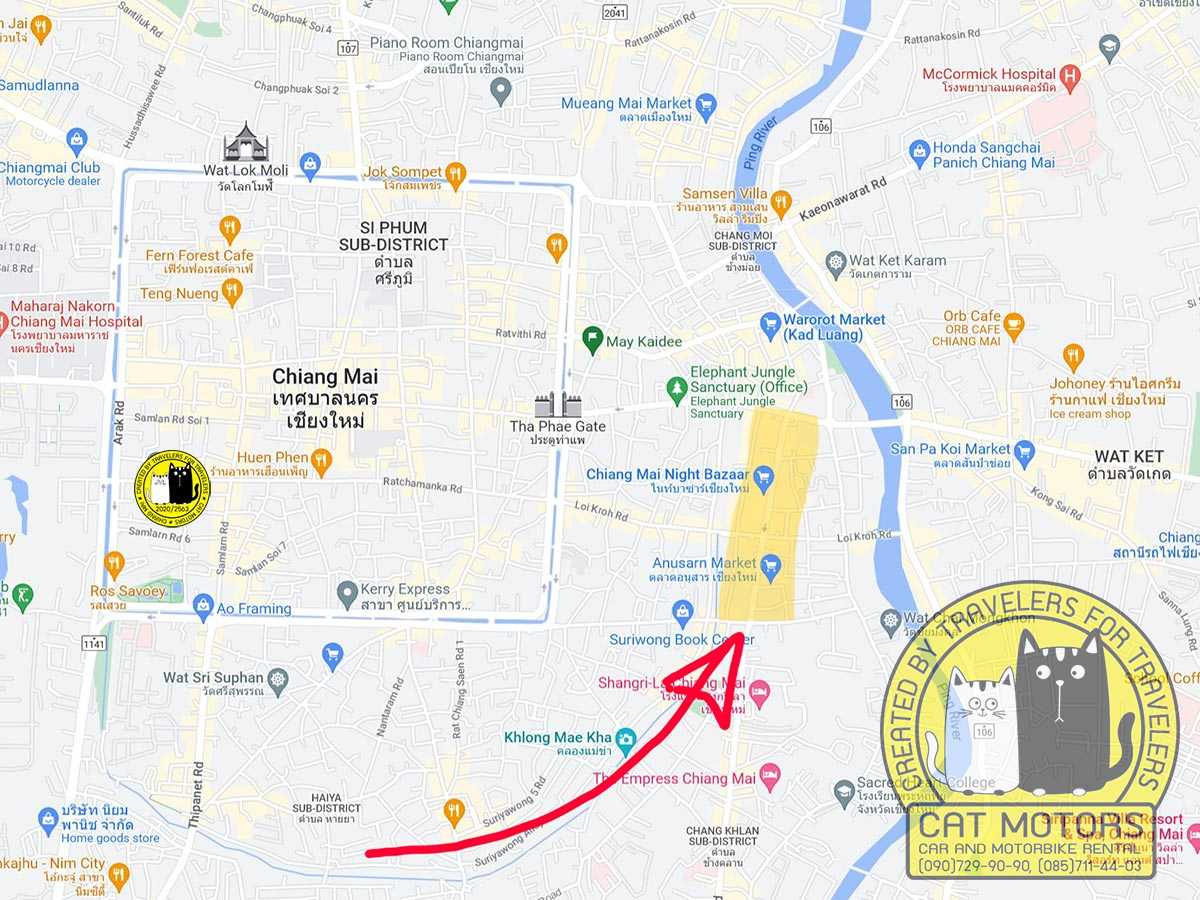
For songthaew (the red shared truck taxis), flag one down heading south on any road near the Old City moat and confirm “Night Bazaar” before boarding. The standard shared fare is around 20 THB per person. Tuk-tuks charge roughly 100 THB from the Old City; negotiate before getting in. Grab ride-hailing is also available.
If you rented a motorbike in Chiang Mai, getting to the Night Bazaar is simple from any direction. Chang Khlan Road runs straight and is well-signed. A dedicated parking building near the bazaar has two structures for both cars and motorbikes. Street parking on Chang Khlan Road fills up after 19:00, but the side streets behind Kalare and near Anusarn Market usually have free spots until around 20:00.
Night Bazaar Opening Hours
The Night Bazaar operates daily from 18:00 until midnight. Vendors on Chang Khlan Road begin setting up around 17:00 to 17:30, but full operation across all three zones starts closer to 18:00. Some street stalls begin closing by 22:30, while Kalare’s covered shops and the boxing stadium run later. The busiest period is between 19:00 and 21:00.
Best Time to Arrive
Arriving between 18:00 and 19:00 gives the best combination of vendor selection and comfortable browsing. The heat drops noticeably after sunset, the full range of food stalls is operational, and you have time to eat before Muay Thai starts at 21:00. Arriving after 21:00 means missing peak food stall selection and walking into a thinning crowd on Chang Khlan Road.
For the most efficient visit, start at Anusarn Market at the southern end of Chang Khlan Road, walk north through the street stalls, and finish at Kalare Night Bazaar, covering all three zones in roughly two hours with no backtracking.
“One detail that catches first-time visitors off guard: the northern end of Chang Khlan Road, near Tha Phae, is not where Anusarn Market is. You end up at the opposite end from where you started. If you rode a motorbike and parked near Anusarn, the walk back is about ten minutes. Or just grab a songthaew heading south for 20 baht.” — Konstantin, Founder of Cat Motors Motorbike Rental


